Leopold Aschenbrenner’s AI Fund Cut Its Reported Holdings 92% in One Quarter

Leopold Aschenbrenner’s Situational Awareness cut its reported 13F holdings to $1.58 billion as of Sept. 30, down from $20.24 billion at June 30, according to the fund’s 13F filings. That’s a 92% decline in a single quarter, disclosed in a filing dated Nov. 16. The August unwind and Citadel’s selling were reported earlier. The disclosure shows a sharp decline in reported holdings, though the shift into options makes the fund’s actual reduction in exposure difficult to measure.
The fund sold its common-stock positions in SanDisk (NASDAQ:SNDK), Micron Technology (NASDAQ:MU), Bloom Energy (NYSE:BE), Nebius Group (NASDAQ:NBIS) and CoreWeave (NASDAQ:CRWV), plus a long list of chip, power and crypto-mining names. Micron and CoreWeave are gone entirely.
A Smaller, Option-Heavy Book Takes Shape
The new top holding is SharonAI, an Australian GPU cloud provider, at $441 million, or 27.9% of reported holdings. About $1 billion of the rest sits in call options on Bloom, Nebius, SanDisk and a memory ETF. Calls on 1,405,000 Bloom shares ($389,156,900 underlying), 1,410,000 Nebius shares ($332,590,800) and 105,000 SanDisk shares ($182,688,450) are listed as well.
A 13F counts options at the value of the shares underneath them, ignoring what the options cost or what they’re worth now. The form also covers only U.S.-listed long holdings, so shorts, cash and private stakes stay invisible. The fund’s real economic exposure to these three names can’t be read from this filing.
What the AI Infrastructure Thesis Looks Like Now
All five stocks map to the memory, power, and compute layers of AI spending, and most of the fundamentals held up. Micron posted fiscal Q4 revenue of $54.23 billion, up 379.3% year over year.
SanDisk’s datacenter revenue reached $4.80 billion in fiscal Q1, up 61% sequentially. Bloom raised its 2026 revenue guidance for the third time, to $4.40 billion to $4.60 billion.
The compute layer showed more strain. Nebius cut its 2026 revenue outlook to the low end of $3.0 billion to $3.4 billion on colocation delays. CoreWeave carried net interest expense of $846 million in Q3 and a debt-to-equity ratio of 8.94.
Trading shares for calls on Bloom, Nebius, and SanDisk keeps upside exposure with less capital committed, which limits the capital at risk.
The through-line across these names is the same expansion thesis: memory, power, and compute to feed AI data centers (we pulled together seven suppliers behind that expansion, from power to cooling, in a free report here: 7 Stocks Powering the AI Boom (That Aren’t Chipmakers)).
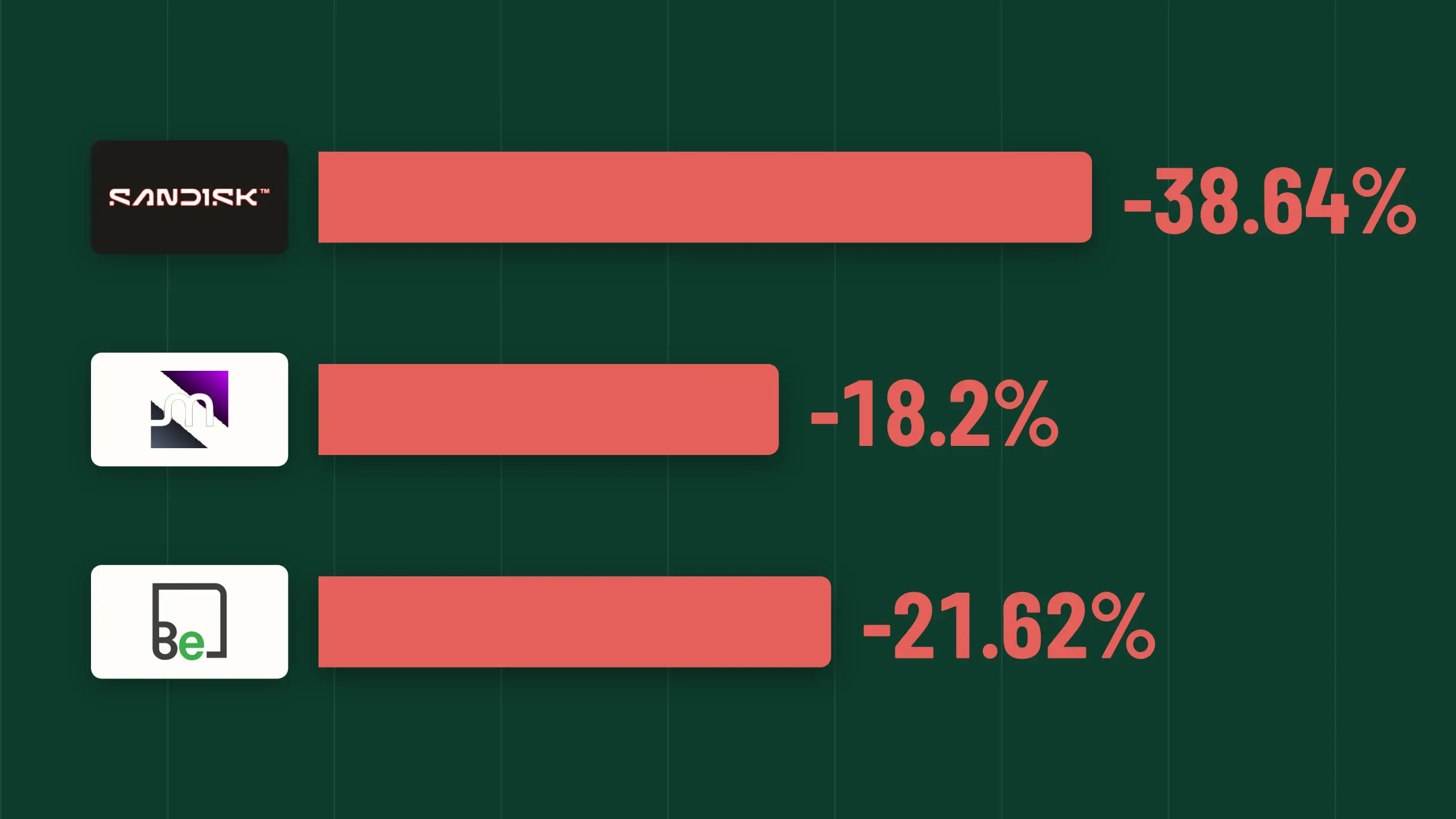
In hindsight, the retreat looks well timed. Over the past month, SanDisk fell 38.64%, Nebius 34.19%, Bloom 21.62%, CoreWeave 19.16%, and Micron 18.2%.
Should Retirement Investors Follow This Move?
Copying this trade carries clear limitations for a retirement portfolio. The picture is from Sept. 30, filings land about 45 days after quarter-end, and nothing here shows what the fund holds today. Most of the remaining exposure sits in call options with undisclosed strikes and expirations.
Options can expire worthless. A 27.9% weight in one young neocloud is far more concentration than most retirement portfolios are built to handle.
A 24/7 Wall St. podcast noted that Aschenbrenner was early into Bloom Energy. Even so, he cut gross exposure while Micron, SanDisk and Bloom kept posting record growth. Strong business momentum and stock risk can split apart fast.
Long-term holders of these names should weigh valuation and balance-sheet strength, especially at heavily leveraged compute providers like CoreWeave, more than the fund’s next filing.
Released: The Definitive Guide to Retirement Income
(Sponsor) Most people spend their entire working lives focusing on one thing: growing a pile of money. Then they retire and discover the skill they actually need is close to the opposite. Turning that pile into steady income, year after year, through good markets and bad, without ever running out.
It may be the least discussed and most consequential transition in personal finance, and plenty of otherwise careful investors walk into it with no real plan. That is exactly what The Definitive Guide to Retirement Income helps answer. It is a free guide from Fisher Investments covering what your retirement will really cost, where the cash flow should come from, and how much you can safely withdraw each year. Learn more here. Learn More Here ›
Pôvodne publikované na 247wallst.com