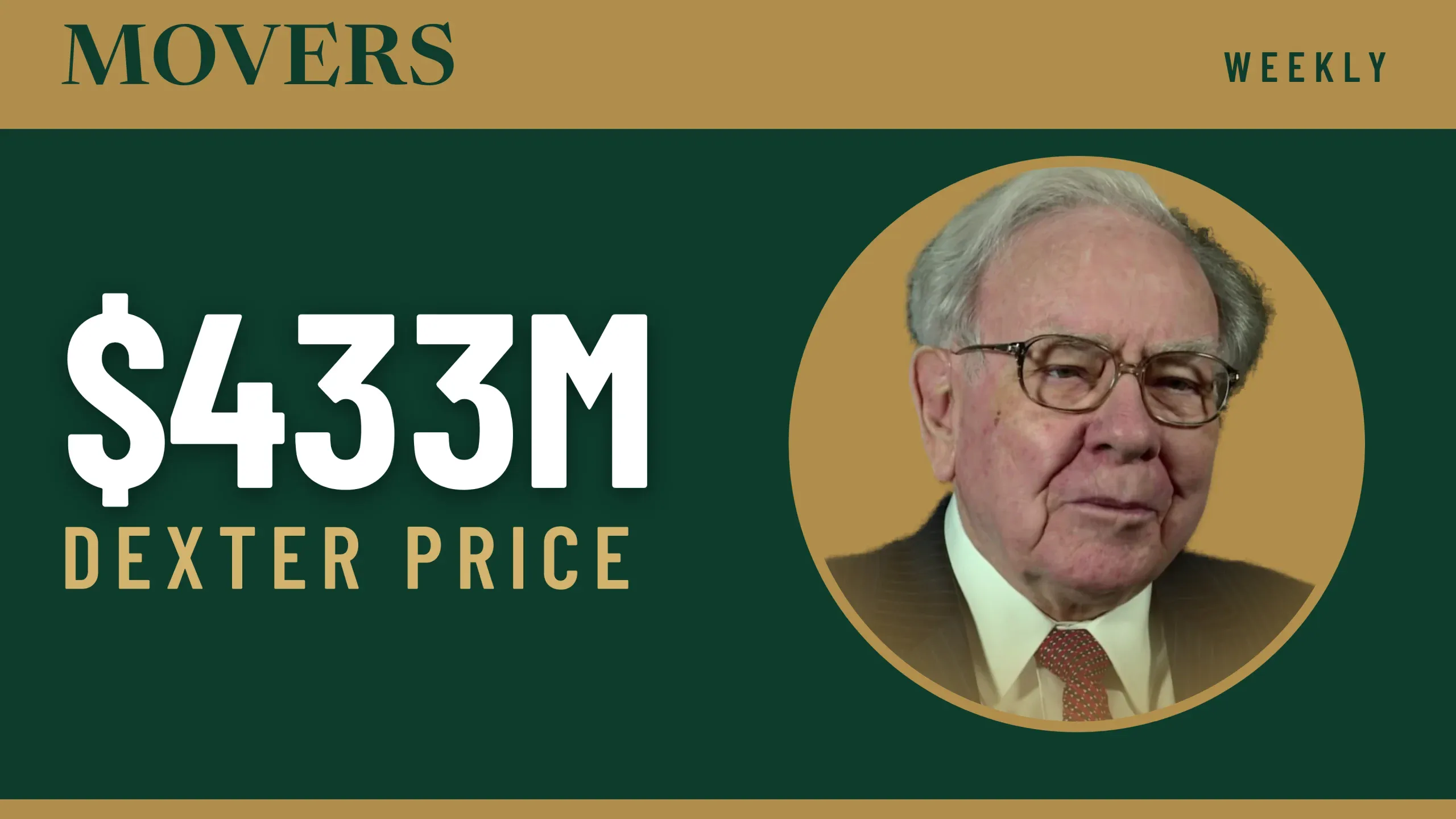
In 1993, A 79-Year-Old Maine Shoemaker Sold His Company To Warren Buffett For Berkshire Shares Instead Of Cash. Buffett Called It His “Worst Deal” As The Shoe Company’s Value Went To Zero, While Harold Alfond’s Berkshire Shares Are

In 1993, as WMTW reported, Warren Buffett agreed to buy Dexter Shoe Company from its founder and offered to pay cash. Harold Alfond was 79 at the time of the sale, according to the Harold Alfond Foundation. He turned down the cash and asked to be paid in shares of Berkshire Hathaway (NYSE:BRK-A, NYSE:BRK-B).
Forbes explained his reasoning in 1998: “Buffett offered cash, but Alfond did not want to pay huge capital gains on a zero basis for his stock.” Maine TV station WMTW reported this fall that Alfond agreed to sell “on the condition that he be paid in Berkshire Hathaway stock instead of cash.”
That one condition decided how the deal turned out. The shoe company Alfond sold became worthless. The stock he took became one of Maine’s great family fortunes, and Buffett has spent years telling the tale against himself.
If you have ever sold a business, a farm or a stock you bought decades ago, you know the moment Alfond faced. The price was settled. What remained was the form of payment, and your answer to that question can shape your family’s finances as much as the price itself.
From an Empty Mill to Millions of Shoes
Alfond built Dexter from very little. Per the Harold Alfond Foundation, in 1958 he bought a vacant woolen mill in Dexter, Maine, for $10,000, and Dexter Shoe Company was born. WMTW reported that the company went on to sell millions of shoes and employ thousands of people in Maine.
By the time Buffett came calling, Dexter had a well-known name and a long record. Buffett believed it had a lasting edge over its competitors. He was wrong, and he has said so in writing more than once.
Buffett’s Own Verdict on His Worst Deal
In his 2007 letter to Berkshire shareholders, Buffett wrote: “Finally, I made an even worse mistake when I said ‘yes’ to Dexter, a shoe business I bought in 1993 for $433 million in Berkshire stock (25,203 shares of A).” He continued: “What I had assessed as durable competitive advantage vanished within a few years.”
Then came the line that has followed the deal ever since: “To date, Dexter is the worst deal that I’ve made.” If you have ever regretted a sale or a purchase, you may find some comfort in how freely the most famous investor of his era owns up to his.
In his 2014 letter, dated Feb. 27, 2015, Buffett went further: “Berkshire paid $433 million for Dexter and, rather promptly, its value went to zero.” Ranking his mistakes, he wrote, “The most gruesome was Dexter Shoe.” He closed with a flourish: “As a financial disaster, this one deserves a spot in the Guinness Book of World Records.”
Why Paying in Stock Made the Loss So Much Bigger
A failed purchase paid in cash ends with the cash. A purchase paid in shares keeps costing the buyer, because the seller now owns a slice of everything the buyer makes from then on. Buffett spelled that out in the same letter: “By using Berkshire stock, I compounded this error hugely. That move made the cost to Berkshire shareholders not $400 million, but rather $3.5 billion.”
Buffett wrote that “In essence, I gave away 1.6% of a wonderful business” to buy a worthless one, and he put that wonderful business at $220 billion at the time. If you own shares in a company that pays for acquisitions with its own stock, you sit on Buffett’s side of this trade.
The gap kept widening. As of Buffett’s 2014 letter, the Berkshire shares used for the Dexter purchase were worth $5.7 billion.
WMTW’s Jim Keithley put today’s figure far higher, writing in September 2026: “The Berkshire Hathaway shares acquired by Alfond are now worth an estimated $20 billion, making the Alfond family the richest family in Maine.”
Another benchmark: Berkshire Class A stock traded at $852,000 a share around noon on Nov. 19, 2026. At that price, the 25,203 Class A shares Buffett used to buy Dexter would be worth $21.5 billion.
That figure describes the original shares only. How many remain with the Alfond family or the foundation is not public. If you own Berkshire today, you most likely hold the Class B shares, which were created in 1996, after Alfond’s deal. Your shares ride on the same compounding that turned his payment into a fortune.
How a Shoe Fortune Became Maine’s College Fund
Alfond gave nearly all of the money away. According to the Harold Alfond Foundation, “Upon his passing, Harold Alfond committed nearly all of his wealth to the Harold Alfond Foundation, which continues to support charitable causes in the State of Maine today.” Jim Keithley of WMTW reported that Alfond died in 2007 at the age of 93.
That same year, Keithley wrote, Alfond launched his College Challenge, giving every child born in Maine a $500 college grant. Greg Powell, identified by WMTW as executive chairman of the foundation’s board, said “There is over $800 million saved for higher education for Maine kids.”
Powell had his own reply to Buffett’s assessment: “Buffett calls it his worst deal. I’d like to tell Harold, when he was with us, that Warren Buffett was the second greatest investor in America.” He also remembered Buffett telling him: “Well, I made a mistake in buying Dexter, but it’s good to know something great happened because of it.”
What Alfond’s Choice Means for Your Own Sale
You may never sell a company to Buffett, but you could face the same fork when you sell a business or a stock with a tiny cost basis. Selling for cash usually triggers capital gains tax right away, and with a basis near zero, almost the entire price counts as gain. The federal tax code says that in certain corporate reorganizations, when stock is exchanged solely for stock, “No gain or loss shall be recognized” at the time of the swap.
That delay has a cost of its own. Taking the buyer’s shares ties your wealth to a company you do not run, for as long as you hold them. Alfond’s business went to zero inside Berkshire, and his fortune grew only because the buyer kept compounding. If you are considering the same choice, you would want to know how much of your net worth would sit in one stock, whether you could diversify gradually, and who inherits the shares. Under federal law, heirs generally take a basis equal to “the fair market value of the property at the date of the decedent’s death,” which can wipe out a lifetime of built-in gain.
The decision that matters most is the form of payment, because once a sale closes, it is very hard to undo. Your circumstances will differ from Alfond’s, and a stock-for-stock sale can just as easily tie you to a buyer that trips up. Ownership, beneficiaries, and the trust that holds the shares matter as much as the sale itself (we put the full estate checklist in a free guide here). In his case, Buffett lost a shoe company, and the shares Alfond insisted on now help send Maine’s children to college.
Released: The Definitive Guide to Retirement Income
(Sponsor) Most people spend their entire working lives focusing on one thing: growing a pile of money. Then they retire and discover the skill they actually need is close to the opposite. Turning that pile into steady income, year after year, through good markets and bad, without ever running out.
It may be the least discussed and most consequential transition in personal finance, and plenty of otherwise careful investors walk into it with no real plan. That is exactly what The Definitive Guide to Retirement Income helps answer. It is a free guide from Fisher Investments covering what your retirement will really cost, where the cash flow should come from, and how much you can safely withdraw each year. Learn more here. Learn More Here ›
Pôvodne publikované na 247wallst.com