

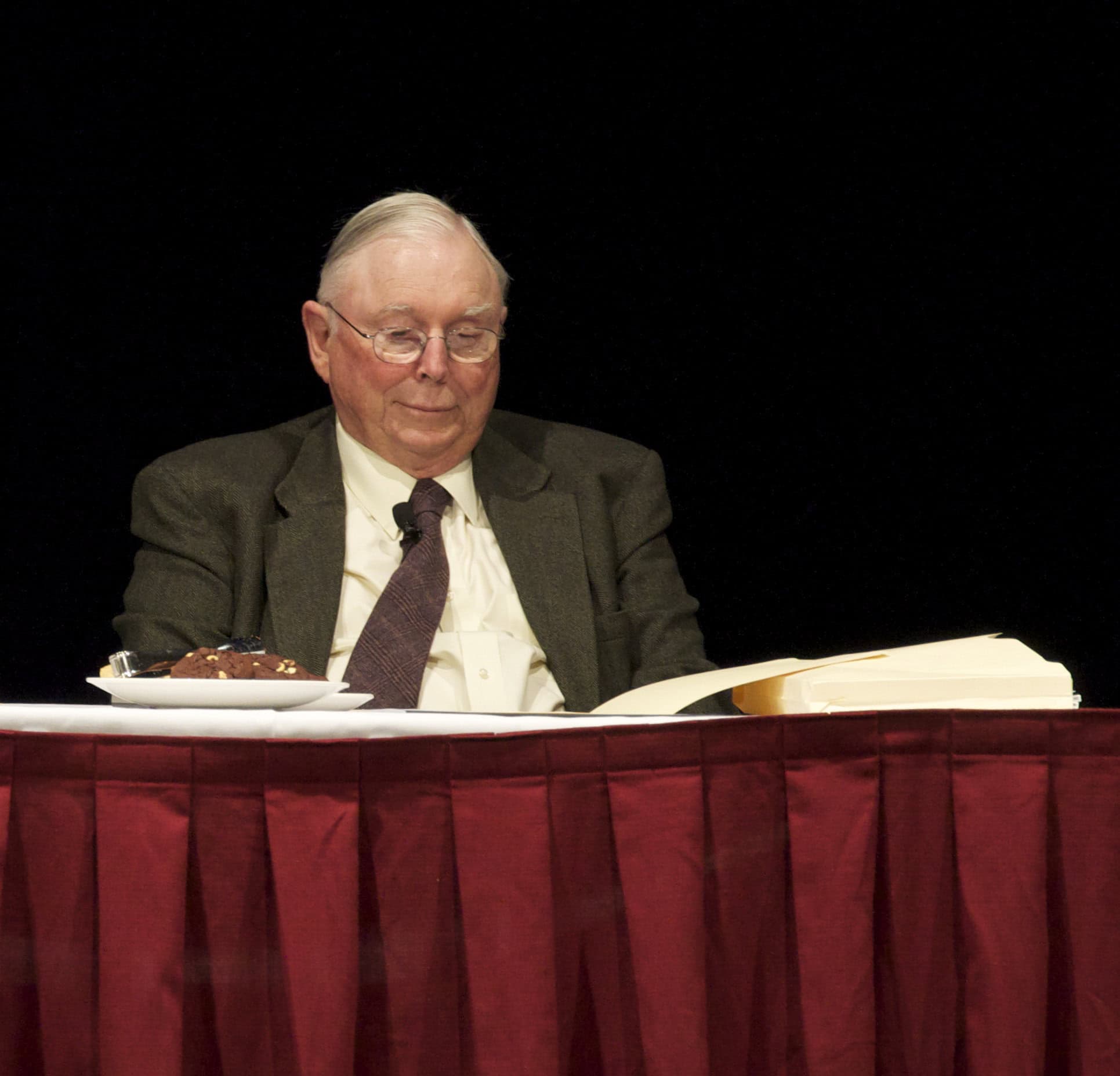
Charlie Munger Said He’d ‘Never Sell a Share’ of Costco. $10,000 From 1997 Is Now Worth $833,000 and Gets a $22,535 Check on Dec. 4

Costco Wholesale (NASDAQ: COST) pays a $30-a-share special dividend on Dec. 4 to shareholders of record on Nov. 24. Under Nasdaq's rule for a payout this size, the stock goes ex-dividend on the record date, so a buyer has to own the shares by the close on Monday, Nov. 23.
Charlie Munger would have collected it without lifting a finger. He joined Costco's board in January 1997, after Warren Buffett passed on the seat, and stayed on it for almost 27 years, until he died in November 2023 at 99. At the Daily Journal's annual meeting in February 2023, he put his view of the stock plainly: “I love everything about Costco. I'm a total addict, and I'm never going to sell a share.”
Costco closed at a record $1,113.74 on Monday and at $1,110.08 on Tuesday.
Take a couple who did what Munger did. In January 1997, at 45, he put $10,000 into Costco at $26.63 a share, about 376 shares. The 2000 stock split doubled them to about 751, and he never sold one. He is 74 now, his wife is 72, and those shares are worth $833,863, more than 83 times what he paid. This is a scenario, but the math is the stock's real history.
Their other money is ordinary: about $370,000 in an IRA and savings, plus $4,000 a month in Social Security between them. Costco is 69% of their savings. If you have a stock like this, the question is the same one Munger faced: keep it, or start selling.
What the shares have already paid them
Costco started paying a dividend in 2004, at 10 cents a share. Since then it has raised the regular payout many times and added five special dividends: $7 in 2012, $5 in 2015, $7 in 2017, $10 in 2020 and $15 at the end of 2023.
Add it up and the couple's 751 shares have paid $68,379 in dividends, about seven times the $10,000 they started with. The regular dividend now comes to $4,417 a year. The new $30 special adds $22,535 on Dec. 4.
That special check is taxable this year. It counts as a qualified dividend, so most of it falls in the 0% and 15% brackets for this couple. It also lands in the income Medicare uses to set premiums two years from now, so a big special payment is worth a call to a tax preparer before the year ends.
The tax bill if they sell it all
Their cost is $10,000. Their gain is $823,863. Here is roughly what selling every share in one year would do to their 2026 federal return, using this year's brackets for a married couple filing jointly:
- Without the sale, their taxable income is about $13,300 after the $32,200 standard deduction, the extra $3,300 for being 65 or older and the new $6,000-per-person senior deduction. Federal tax: about $1,330.
– With the sale, the senior deduction phases out entirely, and the rest of their income takes up $25,300 of the brackets before the gain stacks on top.
– The first $73,600 of the gain fills the rest of the 0% capital gains bracket, which runs to $98,900 of taxable income.
– The next $514,800 is taxed at 15%, up to $613,700.
– The last $235,463 is taxed at 20%.
– The 3.8% net investment income tax hits investment income once their income passes $250,000, adding about $24,117.
Total federal tax with the sale comes to about $150,970. The sale itself costs them about $149,640, or 18% of the gain, before any state tax. A gain that size would also raise their Medicare Part B and Part D premiums two years later.
What Munger's own example points to
Munger owned 187,180 Costco shares directly as of the company's 2022 proxy. At Tuesday's close those shares would be worth about $208 million.
Under federal law, when someone dies, the people who inherit a stock generally get a new cost basis equal to its value on the date of death. The gain built up over a lifetime is never taxed. For this couple, holding until death would erase the $823,863 gain for their heirs. Selling in one year would cost about $149,640 in federal tax.
That is why many long-time holders of a big winner do what Munger said he would do. The step-up makes the hold cheaper than any sale.
Where holding is weak
Holding only works if the stock holds up, and Costco has fallen hard before. From April 2000 to December 2002, it dropped 48% on a month-end basis. Our couple's stake fell from $40,610 to $21,078 and did not get back to its old high until March 2006. In 2022 it fell 21%, and the same shares went from $432,563 to $342,911 in nine months.
Today the stake is $833,863 and makes up 69% of their savings. A 48% drop now would take about $400,000 off their net worth.
Berkshire Hathaway, Buffett's company, sold its Costco stake in late 2020. The stock is up 195% since the end of that year.
A middle path
Some long-time holders sell slowly. For this couple, the 0% capital gains bracket has at least $69,183 of room each year after their regular dividends, and more through 2028 while the senior deduction lasts. Since almost all of the value is gain, they could sell about $70,000 of stock, roughly 63 shares, every year and owe no federal tax on the gain. Over five years that would move about $350,000 out of Costco and cut it from 69% of their savings to about 40%, if prices held.
They could also give shares to a charity directly instead of cash. The charity sells them, and nobody pays tax on the gain.
The bottom line
The couple's $10,000 bet beside Munger became $833,863 in shares plus $68,379 in dividends, with $22,535 more coming Dec. 4. Selling it all this year would cost about $149,640 in federal tax. Holding it until death would cost nothing in capital gains tax, and that is what Munger said he would do. Selling about 63 shares a year at 0% is the slow way out. If you hold a single stock that has become most of your money, run your own numbers before the next 48% drop, and before a record high tempts you into a sale you have not priced.
Released: The Definitive Guide to Retirement Income
(Sponsor) Most people spend their entire working lives focusing on one thing: growing a pile of money. Then they retire and discover the skill they actually need is close to the opposite. Turning that pile into steady income, year after year, through good markets and bad, without ever running out.
It may be the least discussed and most consequential transition in personal finance, and plenty of otherwise careful investors walk into it with no real plan. That is exactly what The Definitive Guide to Retirement Income helps answer. It is a free guide from Fisher Investments covering what your retirement will really cost, where the cash flow should come from, and how much you can safely withdraw each year. Learn more here. Learn More Here ›
Pôvodne publikované na 247wallst.com




