


How Energy Efficient Cooling Fluids Demand Surges
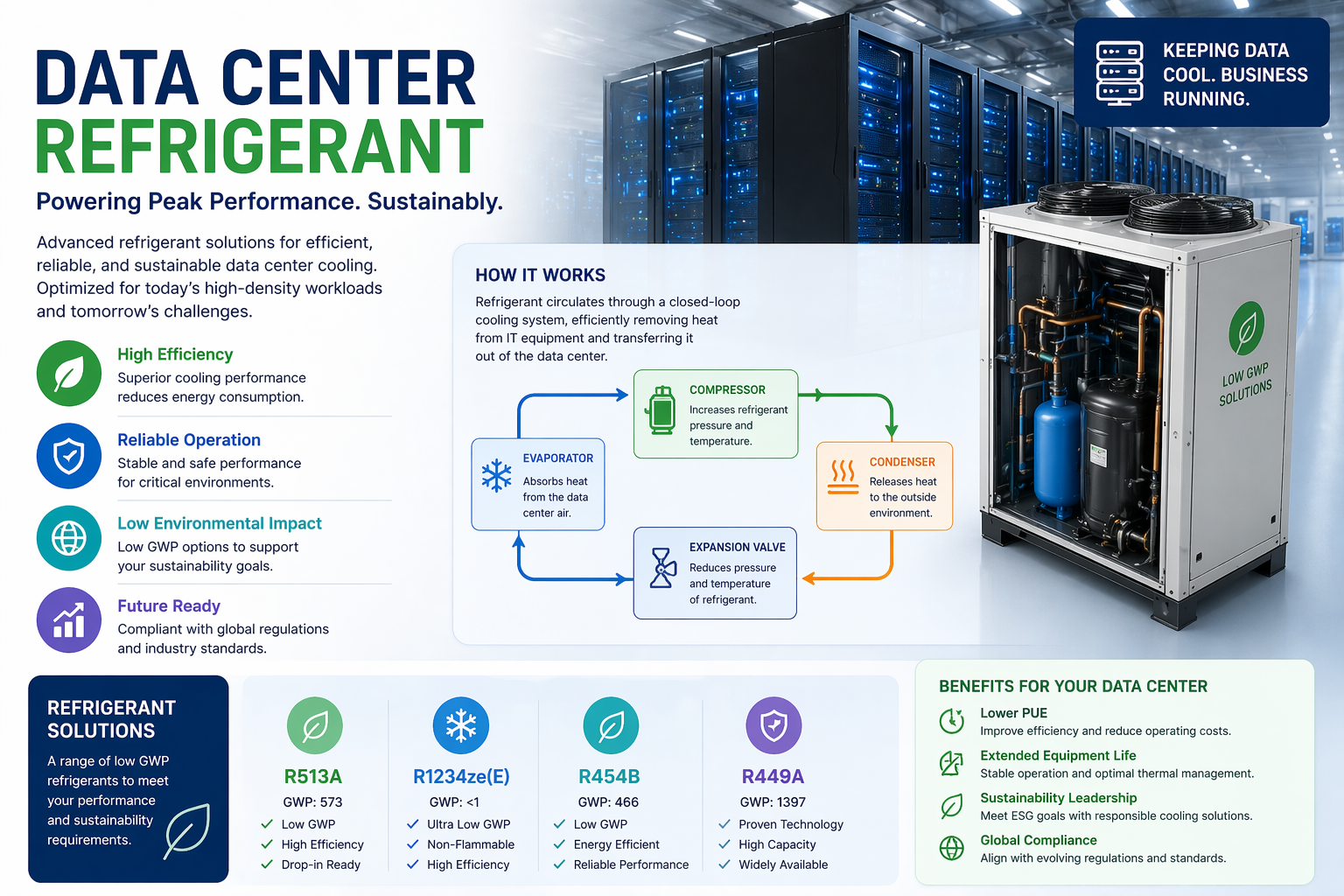
In the competitive realm of data center operations, the choice of energy efficient cooling fluids can significantly influence overall performance and sustainability. As the Data Center Refrigerant Market continues to evolve, the shift towards environmentally friendly solutions is not just a trend but a necessity driven by increasing energy costs and regulatory demands. With an expected market size of USD 1,268.06 million by 2035 and a robust CAGR of 9%, the spotlight is on how energy efficient refrigerants are set to reshape data center cooling technologies. The integration of these fluids not only addresses environmental concerns but also enhances operational efficiency, marking a pivotal shift in cooling strategies for data centers.
The landscape of the Data Center Refrigerant Market today reveals a growing emphasis on sustainability and efficiency. Prominent market participants, including Mitsubishi Electric (JP), LG Electronics (KR), and Trane Technologies (IE), are at the forefront of developing innovative energy efficient cooling fluids suitable for data center operations. As the demand for data processing increases, companies are integrating advanced cooling solutions that utilize these efficient refrigerants, thereby improving thermal management systems and addressing the evolving requirements of modern data centers. The regulatory environment increasingly supports this transition, favoring low-GWP options as a standard.
The adoption of energy efficient cooling fluids is being driven by several interconnected factors. Firstly, the rising costs of energy necessitate the use of solutions that minimize electricity consumption while maximizing cooling capabilities. Data centers are notoriously energy-intensive, leading operators to seek technologies that can deliver the same or improved performance without incurring high operational costs. Secondly, regulatory frameworks are tightening around the use of traditional refrigerants with high GWP, urging companies to adopt alternatives that align with environmental standards. This creates a dual incentive for businesses to innovate and invest in sustainable practices.
Recent data indicates that energy expenses account for approximately 30% of the total operating costs in data centers, making the financial case for energy efficient cooling solutions compelling. According to the U.S. Department of Energy, implementing energy efficient technologies could save data centers up to 40% on energy costs. For instance, companies like Facebook and Google have invested heavily in advanced cooling technologies that utilize refrigerants with a lower global warming potential (GWP). These investments not only reduce their carbon footprint but also lead to substantial cost savings, showcasing a successful model for other firms in the industry.
Regionally, the North American market is setting the pace with its established infrastructure and demand for energy efficient solutions. Companies are increasingly investing in HVAC cooling solutions designed specifically for data center applications. Meanwhile, emerging markets in the Asia-Pacific region are experiencing rapid growth in data center construction, fueled by the digital revolution. Countries like India and China are laying the groundwork for extensive data infrastructure, resulting in significant opportunities for energy efficient cooling fluids catering to new data centers across the region.
The Data Center Refrigerant Market is ripe with opportunities for innovation and growth. The transition towards energy efficient refrigerants not only responds to regulatory pressures but also opens new avenues for financial investment and research. Emerging trends highlight the demand for advanced thermal management systems that can effectively integrate with energy efficient cooling fluids. Companies that can bring these solutions to market will be well-positioned to capitalize on growing opportunities as data centers look to enhance operational efficiencies.
As we gaze into the future of the Data Center Refrigerant Market, it is clear that the integration of energy efficient cooling fluids will play a crucial role. Analysts predict that by 2035, we will witness a paradigm shift in how data centers operate, with a strong emphasis on sustainable practices and innovation. The convergence of regulatory changes and technological advancements will catalyze further investment in energy efficient refrigerants, ultimately redefining industry standards. Data centers will increasingly rely on these solutions to optimize performance while adhering to environmental mandates.
AI Impact Analysis
AI and machine learning are significantly reshaping the landscape of energy efficient cooling fluids in data centers. By employing AI algorithms, operators can optimize cooling processes, predicting changes in thermal loads and adapting accordingly. This not only enhances the efficacy of cooling systems but also reduces wasteful energy consumption. The implementation of AI-driven analytics in thermal management helps in fine-tuning HVAC systems, ensuring that energy efficient refrigerants achieve their full potential in sustaining optimal operational levels.
Frequently Asked Questions
Access the report in Japanese, German, French, Korean, Chinese, and Spanish through our dedicated language pages
Marché des fluides frigorigènes pour centres de données




 Čeština
 French
 Spanish
 Portuguese
 Deutsch
 Turkish
 Dutch
Dutch
 Italiano
 Russian
 Romaian
 Portuguese (Brazil)
 Greek
Greek
 Slovenčina