

EU works to clarify common defense pact without treading on NATO
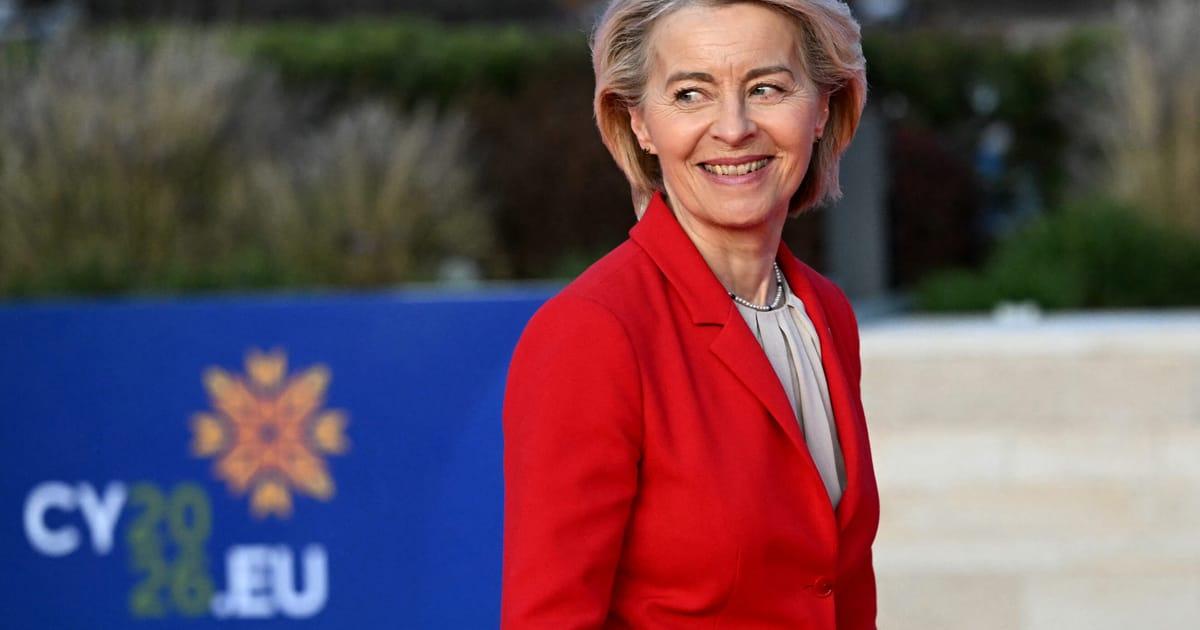
NICOSIA — EU leaders were pressed by Cyprus this week to clarify how the bloc’s little-used mutual defense clause is supposed to work, aiming to better protect member countries while not undermining NATO.
“The treaty is very clear about the what,” European Commission President Ursula von der Leyen said during a meeting of EU leaders in Cyprus of Article 42.7 of the EU Treaties which obliges member countries to come to each other’s aid if attacked, but added: “The treaty is not clear about what happens when and who does what.”
Cyprus was keen to push the discussion during the summit as it’s one of the four EU countries which doesn’t belong to NATO. Its security worries were highlighted when it was hit with Iranian drones in the early days of the Middle East war.
While Cyprus wants the article to be better defined, countries on the frontline against Russia are worried about the EU pledge clashing with NATO’s Article 5 common defense pact.
Seeking to reassure them, Cyprus Foreign Minister Constantinos Kombos told POLITICO on the sidelines of the leaders’ meeting that 42.7 is “not about defense, I agree with that, it’s about mutual assistance.”
If a country is attacked, the article does not mandate that other members have to respond with military force. It says they have an “obligation of aid and assistance by all the means in their power.” According to the EU’s diplomatic body, that can take different forms, ranging from diplomatic support to technical or medical assistance as well as civilian or military aid.
Kombos said that Cyprus looked at France’s experience after it triggered the article in 2015 in response to terrorist attacks, studying a Council legal opinion and a Commission document on the lessons learned.
The Council document says that “when you have an attack in the territory of another state, the other 26 have a legal obligation to respond to that, not in a manner that is merely symbolic,” Kombos said. However, the Commission document shows that “there is no mechanism or clarity as to how you procedurally trigger it, what happens then, who talks to who.”
There is a broader effort to bring some precision to 42.7 — something expressed by von der Leyen, German Chancellor Friedrich Merz and other leaders.
During the summit, Polish Prime Minister Donald Tusk signaled support for making Article 42.7 work in practice, according to a senior EU official in Nicosia.
The issue was discussed during the EU leaders’ dinner on Thursday evening. Cypriot President Nikos Christodoulides presented some ideas on the issue to the other leaders, the official added.
Although they want 42.7 to be fleshed out, Tusk and other leaders are very cautious about the EU playing a large role in defense — something that’s usually been left to NATO and national governments.
EU institutions “have no role unless the member states allocate such a role,” a senior diplomat told POLITICO, adding: “This is not at the expense of obligations that NATO member states have towards NATO.”



 Čeština
 French
 Spanish
 Portuguese
 Deutsch
 Turkish
 Dutch
Dutch
 Italiano
 Russian
 Romaian
 Portuguese (Brazil)
 Greek
Greek
 Slovenčina