


The 10 Most Underrated Movies of Steve McQueen
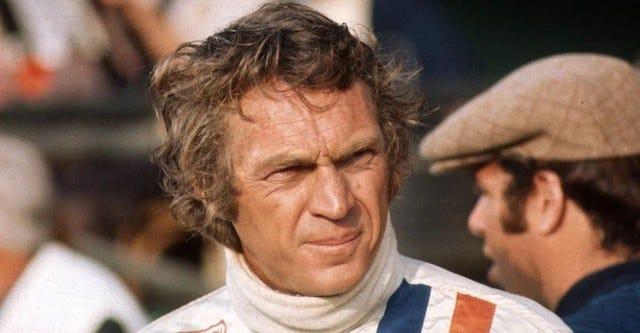

From 1963 to 1972, Steve McQueen was ‘the king of cool’; he carried a laidback attitude with an unconventional sheen, where he said very little but stole every scene he was in.
He grew up rough and tumble, with his father abandoning him as a baby, and living through the wrath of an alcoholic mother, before stints in petty crime, military school, and eventually the army itself. This journey gave him a contempt for authority, where he wanted to play by his rules and no one else’s.
After a successful stint on TV’s “Wanted: Dead or Alive”, he broke into the film business fairly quickly, making every opportunity on screen count, with him soon becoming a reliable supporting player that captivated audiences via his smooth charisma.
McQueen’s major splash was with “The Great Escape” (1963), and from then on, he essentially held a grip on Hollywood as one of its biggest stars. He was easy on the eyes for the ladies, but was also a believable tough guy for the men. He had a flawless run of macho movies during this period, with titles like “Bullitt”, “The Thomas Crown Affair”, “The Sand Pebbles”, “The Getaway”, and “The Cincinnati Kid”. Yet those films are such milestones that they tend to overshadow some of the smaller or more experimental work he did, which hide a strong and versatile actor who could fit well into a variety of genres…
1. Never So Few (1959)

In the late 50s, McQueen had begun building some heat on TV, and also had landed his first lead role in a movie that was a success… however, that film was “The Blob” (1958), and in those days, the horror genre was scoffed at by execs and critics, so it didn’t help him much. He had a lot to prove when he landed a supporting role in this bygone war movie, and he sure made it count.
The plot centres around the US ’involvement in Burma during WW2, as a small but tough squad of military, led by Frank Sinatra’s Captain, take on relentless Japanese forces in the jungle, with McQueen playing a transport officer who shows he’s more than capable with an assault rifle.
This forgotten movie manages to be a pretty fun watch, with it being a late 50s effort, they managed to fit in a romance subplot (with Gina Lollobrigida) and some comedy breaks in too, but the movie really appears to come alive when it is about a no-nonsense gang doing missions (with Charles Bronson amongst the crew as well). It is a formula that director John Sturges would excel later with “The Magnificent Seven” and “The Great Escape”, and this feels like the forgotten testing pad for those masterpieces, even though it doesn’t come close to their epic status, it does enough to make for a gratifying watch.
Sinatra is fine in the lead, he’s got his charm and can pull a dramatic scene when he needs to. McQueen was initially cast in a few scenes, but Sinatra took a liking to him, and his role was expanded to third lead, with him being an immediate physical presence in the action scenes, and consistently captivating, even in the background of scenes (a trait he would become well known for).
2. Hell Is for Heroes (1962)

By the early 60s, McQueen had starred in a string of war movies, displaying strong acting, although the quality of the films didn’t quite match his presence, until he was cast in this tough, white-knuckle tale that strangely seems to get underrated in his bigger filmography.
McQueen’s weathered soldier returns to the battlefield with a brand new squad, as they face off on the frontline, and become embroiled in a cat-and-mouse game against an impenetrable German bunker.
Shot in stark black and white, McQueen plays the hollowed-out private, his boyish good looks covered up with a dirty and unshaven profile, only with his piercing eyes cutting through the grime. Even at a young age, he convincingly plays a man who has gone to hell and back, with a near-silent role, but every glance speaks volumes. He’s ably supported by an ensemble of gruff character actors, including an early James Coburn making a short but memorable turn as the squad’s spectacled flamethrower expert.
The action is vicious and effective; the film is essentially one large standoff between two desperate squadrons, with the first two acts essentially played as strategic set-pieces that all build up to a bombastic finale of all-out war, where McQueen is unleashed in action star mode.
This one was expertly directed by alpha filmmaker Don Siegel (Dirty Harry, The Shootist), and it’s a grand shame that he and McQueen supposedly didn’t get along on set, as they brought the best out of each other at this point in their careers, and could’ve easily knocked out a string of effective action movies together.
3. Soldier in the Rain (1963)

McQueen’s impressive work in “Hell Is for Heroes” got overlooked due to its lukewarm box office performance. The performer continued to work in military movies, but with this gig, he fully shed the macho persona for something completely on the other side of the spectrum, but nonetheless effective.
Set on a military base during peacetime, the movie is a ‘buddy comedy’, with quick-witted hustler Jackie Gleason as the master sergeant, coupled with McQueen’s milder lower-ranking soldier as his partner-in-crime, and straight man, in what starts as a zany comedy, before evolving into something much more involving.
From the jump, it’s almost shocking to see McQueen, playing an ‘aw shucks ’type of innocent, but he manages to pull it off, essentially, letting Gleason be the vibrant wild card role. While not a masterpiece, the film is really elevated by the two leads, who hold a fantastic rapport with each other, as their shared scenes are dynamite and make it an enjoyable experience from end to end, with an unanticipated dramatic third act. It’s one of McQueen’s rare forays into comedy; he fully disappears into the character, and the result was proof he was more than capable of holding his own in the genre, even next to a vet like Gleason.
4. Love with the Proper Stranger (1963)

McQueen was growing hot at this point in Hollywood, with 1963 his true breakthrough year with “The Great Escape”; however, pre-superstardom, he explored different avenues he could fit into as a leading man, and it landed him two collaborations with the Oscar-winning team of director Robert Mulligan and producer Alan J Pakula (To Kill a Mockingbird). One of those collaborations, “Baby the Rain Must Fall” (1965), was a decent if fairly melodramatic Horton Foote adaptation. However, the trio’s first collaboration is a standout that deserves rediscovery in the modern age.
The captivating Natalie Wood plays a put-upon lady in a tight-knit New York Italian household, who finds out she’s pregnant, after a fling with McQueen’s care-free playboy. After he’s confronted with the truth, the two decide to support each other through the abortion process; however, as the day goes by, real feelings of genuine affection begin to emerge on both sides.
Both leads are perfectly cast, Wood is tightly wound with the pressure of her family and unfair odds constantly against her, and McQueen is terrifically cast as the ladies’ man out of his depth, who ultimately steps up to the plate. It’s an engrossing romance that sees the two characters convincingly grow by the movie’s end, and it certainly helps the two have a sparkling dynamic from the word go.
Mulligan expertly directs the piece; it’s not a one-dimensional rom-com but a dynamic character drama with a solid love story in the middle of it, and it’s coupled with fetching period New York photography and a handful of impressive support cast. It’s a display that if McQueen hadn’t blown up into the ‘King of Cool ’that year, he might’ve found himself excelling in roles more akin to Ryan O’Neal or Robert Redford.
5. Nevada Smith (1966)

By the mid-60s, McQueen had become a full-blown star. Studios were falling over themselves to cast him in anything they could get their hands on, which likely explains how he landed the role of a 16-year-old half-Native American here, even though he was blonde, blue-eyed, and 35 years old. Luckily, it’s a pretty effective revenge tale, lost in the flood of his bigger movies in his golden period.
McQueen is the titular character, a young man who has his two parents murdered in the film’s opening by a trio of sinister thugs (played with delicious scenery chewing by Martin Landau, Arthur Kennedy, and Karl Malden). This shocking opening starts him off on his journey, as he grows from a novice to a quick-draw gunman, and from a naive boy to a weathered man.
As said, the initial casting is a bit of a pill to swallow, but luckily McQueen is great in the role, evolving as the film moves forward, from a hotheaded whelp to the capable hunter he becomes. It also helps having some of the era’s best character actors in the villain roles, and none of them disappoint, with Landau’s demise a particularly memorable one.
Renowned genre director Henry Hathaway (True Grit, Kiss of Death) handles proceedings with a polished slant; the film plays out like a classic 50s western, yet coupled with a 60s grit, showcasing some startling violence at certain points. It takes us on an impressive journey with our main character, one where we’re rooting for him to win the day, even though, when faced with it, the results aren’t always quite as black-and-white.




 Čeština
 French
 Spanish
 Portuguese
 Deutsch
 Turkish
 Dutch
Dutch
 Italiano
 Russian
 Romaian
 Portuguese (Brazil)
 Greek
Greek
 Slovenčina