


EU meets to game plan hantavirus response as WHO calms outbreak fears
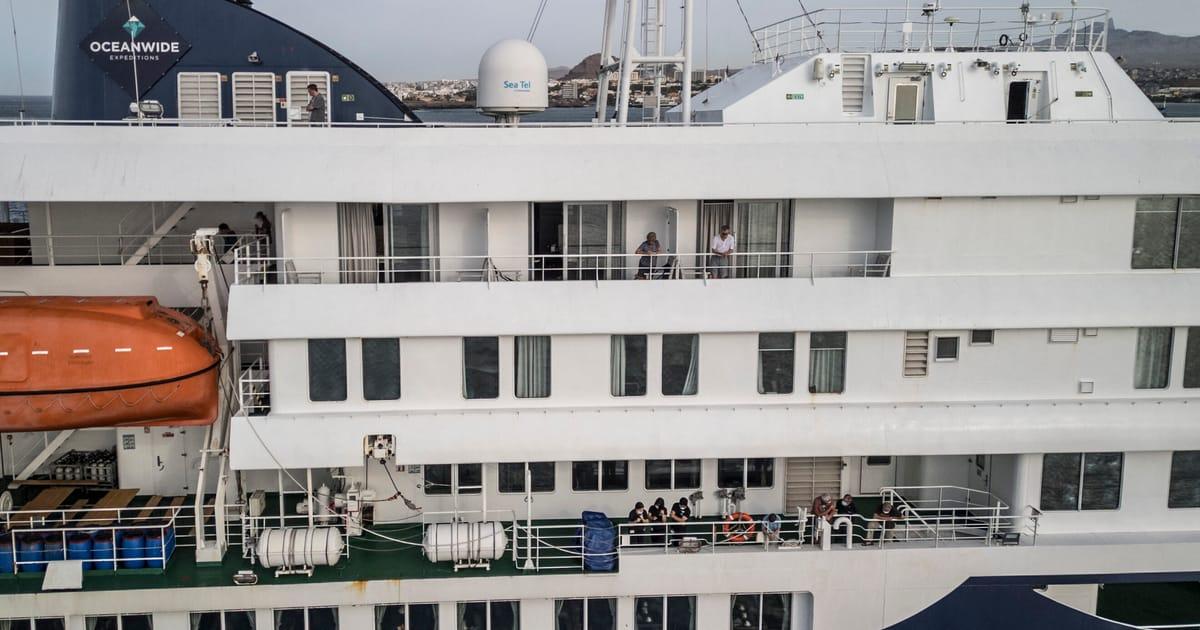
EU countries met Thursday afternoon to coordinate their response to the hantavirus outbreak on a cruise ship bound for Spain, which has so far killed three people.
The World Health Organization, meanwhile, moved to calm fears that the outbreak could trigger a global health emergency on the scale of Covid-19.
“This is not the start of an epidemic, this is not the start of a pandemic,” Maria Van Kerkhove from the World Health Organization told reporters Thursday.
Hantavirus is a disease typically spread by infected rats. So far, there have been five confirmed and three suspected cases of the Andes hantavirus subtype linked to the cruise ship. It is the only variant known to have spread among humans.
It is transmitted through virus-contaminated aerosols from the droppings, urine or saliva of infected rats. Transmission between humans usually occurs through close, prolonged contact, such as between household members or intimate partners.
WHO does not anticipate a “large epidemic” if lessons from previous outbreaks are followed, including the isolation of confirmed cases and active monitoring of close contacts, Abdi Rahman Mahamud, WHO emergency alert and response director, said. It was up to each country how to implement these measures, he added.
“This is not Covid, this is not influenza, it spreads very differently,” Van Kerkhove added. It can take up to six weeks for symptoms to appear, meaning there could be more cases reported, she added.
Ahead of a health security meeting of Europe’s health ministries and disease agencies on Thursday, a European Commission spokesperson told POLITICO the risk to the general public is low and that “safeguarding public health remains the absolute priority.”
“We are remaining vigilant, closely monitoring the situation, and working in close coordination with all affected Member State authorities, WHO, and [the European Centre for Disease Prevention and Control], to ensure a swift and effective response at every stage,” the spokesperson said.
Across Europe, countries are taking steps to isolate passengers returning home from aboard cruise ships. Thirty people disembarked the ship at St Helena, an island in the South Atlantic Ocean, on April 24.
Since the ship sails under the Dutch flag, the Netherlands is coordinating assistance to the passengers through the Ministry of Foreign Affairs, including sending additional medical staff and two epidemiologists to the ship.
The ECDC is advising all passengers to self-isolate for six weeks once they are home. They should be able to leave to exercise or attend medical appointments, but should wear a mask, guidance published Wednesday said.
A Danish citizen is currently self-isolating after returning home at the end of April, and is not displaying any symptoms, authorities said Thursday.
Ireland’s health ministry told POLITICO two of its citizens will “at a minimum” need to quarantine in line with advice from the European Centre for Disease Control and Prevention (ECDC). “For the two Irish nationals on board, decisions regarding repatriation will be taken depending on their medical status, following public health guidance,” the ministry said.
The U.K. has the most citizens on board with 23. British passengers will likely be asked to self-isolate for 45 days on returning to the country, a U.K. health official said.
Spain’s health ministry has reiterated that all passengers will be legally required to self-isolate upon arrival in the Canary Islands, following a suggestion from the country’s defense minister that quarantine would be voluntary. The ship is currently expected to arrive in Tenerife on Sunday morning, according to its operator, Dutch company Oceanwide Expeditions.
It will anchor in front of the port of Granadilla de Abona, and passengers from countries that have arranged repatriation flights will disembark by boat, Virginia Barcones Sanz, director general of Civil Protection and Emergencies, said Thursday.
Spain is in talks with other countries to arrange flights for their citizens, but if they don’t, Barcones said the Netherlands is ready to assume responsibility under international maritime law. “But the European Commission is involved in ensuring that we have this coordinated when the ship arrives,” she said.
An army plane will transfer Spanish passengers to the Gómez Ulla hospital in Madrid.
The WHO is developing guidance on how to safely return passengers to their countries, Van Kerkhove said.
WHO Director-General Tedros Adhanom Ghebreyesus said he had asked Spanish leader Pedro Sanchez to accept the ship and thanked him for meeting his “moral duty.” The risk to the people of the Canary Islands is low, Tedros said.
There are WHO and ECDC experts on board the ship monitoring the health of the passengers, who have been instructed to self-isolate and wear masks when leaving their cabins. No one on board is currently displaying any symptoms, the WHO said Thursday.
Officials believe the outbreak may have begun with a couple who had been birdwatching in South America, including in parts of Argentina where the rat that carries the Andes hantavirus is found.
There were 77 people from Europe aboard the ship, according to a statement from Oceanwide Expeditions on May 4: Great Britain 23, Spain 14, Germany 8 (including one deceased), Ukraine 5, France 5, Greece 1, the Netherlands 13, Belgium 2, Ireland 2, Poland 1, Portugal 1, Montenegro 1 and Russia 1. The figures include one German national who died on board on May 2.
Jakob Weizman and Aitor Hernández-Morales contributed reporting.




 Čeština
 French
 Spanish
 Portuguese
 Deutsch
 Turkish
 Dutch
Dutch
 Italiano
 Russian
 Romaian
 Portuguese (Brazil)
 Greek
Greek
 Slovenčina