


Waterloo and a revolution: Von der Leyen and Costa pick their Eurovision favorites
It’s the big, bright annual event that is supposed to bring Europeans together around their television sets. But, beyond the stage, the Eurovision Song Contest has an unmistakably political side.
As preparations get underway for Saturday’s final in Vienna, EU leaders — and national broadcasters — say that’s something they know well.
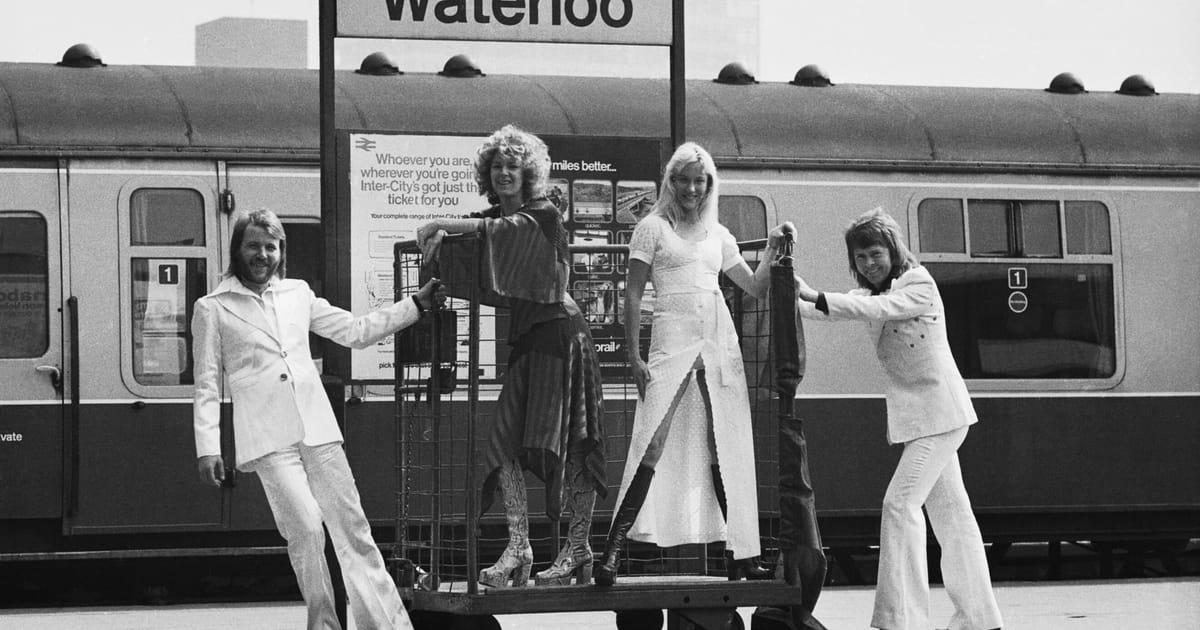
European Commission President Ursula von der Leyen told POLITICO that the most “emblematic” Eurovision song of all time is ABBA’s 1974 hit “Waterloo.” The Swedish classic was “more than just a Eurovision winner,” she said, “it became part of European cultural heritage and launched one of the most iconic pop groups in history.”
The song that “moves me the most,” the German politician went on, “is ‘Ne partez pas sans moi’ by Céline Dion, which won [for Switzerland] in 1988. What a voice, what emotion.” And, from the more recent entries, “I think the energy in ‘Euphoria’ by Loreen in 2012 is unmatched!” The song won for Sweden, and Loreen went on to win the contest again in 2023.
A spokesperson for European Council President António Costa said that his favorite Eurovision entry is Portugal’s 1974 chanson “E depois do adeus” by Paulo de Carvalho. While the song failed to win the contest, it became the anthem for the Carnation Revolution just three weeks later, ushering in the country’s democratic transition.
European Parliament President Roberta Metsola and High Representative for Foreign Affairs and Security Policy Kaja Kallas did not respond to a request for their favorite Eurovision songs.
Following the fall of the Iron Curtain, the participation of the Baltic states, Poland and Ukraine in Eurovision has been seen as a symbol of the continent’s unity. Kyiv’s 2016 entry, “1944” by Jamala, won the contest with lyrics in the Crimean Tatar language testifying to the Stalin-era deportation of her great-grandmother from the peninsula, illegally occupied by Russia since 2014.
Eurovision is traditionally marked by parties and viewings hosted by Brussels’ diplomatic corps — last year, for example, the incoming Danish presidency of the Council of the EU threw a joint reception with the embassy of Switzerland. This year, however, is a more muted affair.
Spain, the Netherlands, Ireland, Iceland and Slovenia declared they would boycott the competition over the continued inclusion of Israel, which is represented this year by Noam Bettan. Brussels hosted a “United for Palestine” event on Tuesday that was billed as an alternative to Eurovision.
Bettan has spoken of his “shock” after his semi-final performance on Tuesday night was disrupted by boos and chants of protest. According to Israeli officials, there have been tens of thousands of antisemitic posts online in the lead-up to the contest.
Miki Zohar, Israel’s minister of culture and sports, has said calls for a boycott are “shameful and hypocritical.” The contest, he said, “is a celebration of music, culture and brotherhood between nations, not a platform for scoring political points.”
Bookmakers have Finland’s “Liekinheitin” as the favorite to win Saturday’s grand final, with the top entry selected by both national juries and a public vote.




 Čeština
 French
 Spanish
 Portuguese
 Deutsch
 Turkish
 Dutch
Dutch
 Italiano
 Russian
 Romaian
 Portuguese (Brazil)
 Greek
Greek
 Slovenčina