


All 23 David Cronenberg Movies Ranked From Worst To Best


Despite turning 82 this year, Canadian cinematic genius David Cronenberg shows no signs of slowing down. In fact, this year’s The Shrouds is one of the finest films he’s ever made, and he’s been a consistent presence on our screens for the best part of sixty years. His output is not just impressive in its scope, but also in its quality. For many, he’s considered the Godfather of the body horror genre, but that’s not all he’s good for, far from it.
He’s shifted genres throughout his career and has successfully adapted novels from authors including William S. Burroughs, Stephen King, and J.G Ballard, some of which were previously thought unfilmable. Cronenberg has also pulled astonishing performances from some of the finest actors in the industry, casting them in features that took them out of their comfort zone in the realms of madness, in the best way possible.
It feels like a crime that the man has never won an Oscar, not that it matters too much; his work has been championed at Cannes, where he won the Special Jury Prize in 1996 for Crash. With The Shrouds he once again proves what a brilliant director he is, adapting his early body horror work to fit into a dystopian future landscape, not the first time he’s done it, and hopefully not the last. In this article we rank all his films from his debut feature Stereo (1969) all the way up to 2025’s The Shrouds.
23. Crimes of the Future (1970)
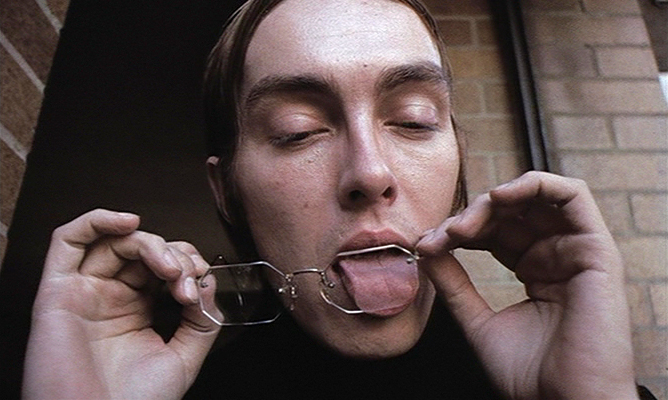
Cronenberg’s second feature has nothing to do with his 2022 film of the same name. It’s also nowhere near as accomplished (understandably in many ways); it’s an art house film that was developed when he was a student, and looking back feels lackluster. However, it seems pretty harsh to lay into the film when there’s still much in it that holds up today, and Cronenberg’s obsessions with sex and the flesh can be glimpsed in Crimes of the Future, themes that still resonate in his most recent work.
The film is an avant-garde science fiction piece that explores body transformation and human evolution in a dystopian future; all elements that you would associate with the director. But the narrative here is fragmented and messy, and although it remains an important document in terms of the future director, Crimes of the Future is probably a film only for the completists.
22. Stereo (1969)
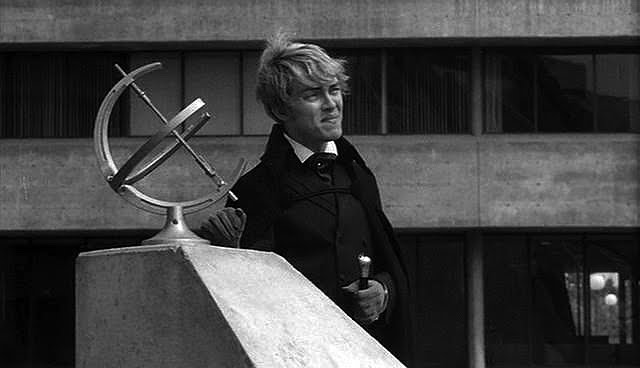
Cronenberg’s debut feature is presented as an educational film about test subjects who are granted telepathy, and are encouraged to test the sexual limits among their peers. This is a set-up that might feel familiar, because it’s certainly something Cronenberg has returned to time and again in a broader sense amongst his future works. But Stereo is a more impressive film than Crimes of the Future (1970) because the linear story works better, and the stark brutalist visuals mirror the cold world that Cronenberg presents.
When you look back on Stereo, it feels like it’s been made by a far more accomplished and experienced director than Cronenberg, who was only in his mid-20’s at the time. He went on to expand the ideas laid down in Stereo far more successfully, but it remains an interesting and important piece of work.
21. M Butterfly (1993)
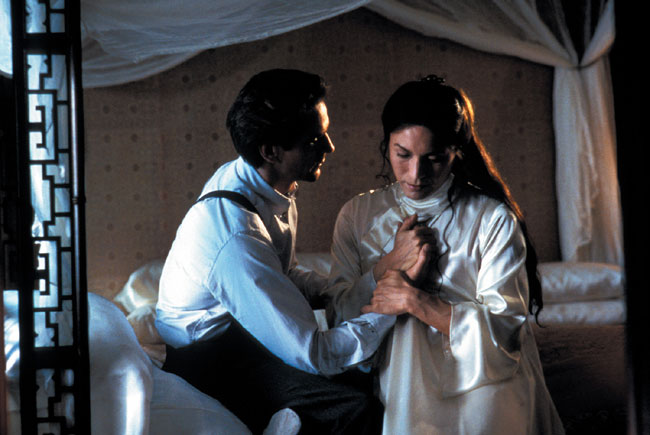
The film is based on David Henry Hwang’s play of the same name, a tale of a French diplomat’s 20-year affair with a Peking opera performer, that doesn’t seem like something made for Cronenberg to take on. Jeremy Irons stars as the diplomat in a role that he’s perfectly attuned to, but M. Butterfly feels, at times, like a much lesser version of the Irons film Damaged (1992). That might seem like a very strange comparison, but Cronenberg’s film feels hollow, and frequently far too well behaved.
Still, the performances are terrific, and Cronenberg directs with an impressive self-awareness of the source material, which is supposedly based on a true story. There’s a coldness to the characters that detaches you somewhat from proceedings, and ultimately, it’s an admirable if heavily flawed piece of work.
20. Fast Company (1979)
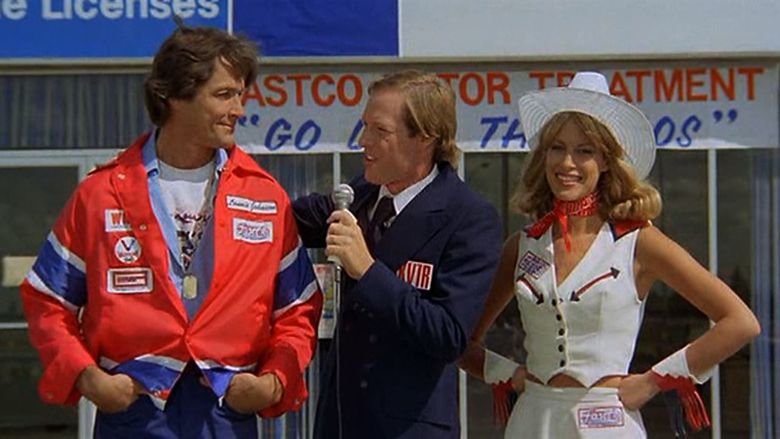
It wouldn’t be the last time Cronenberg laid bare his interest in vehicles on screen, but it is perhaps the least accomplished. Fast Company is for all intents and purposes a B-movie dressed up as something far more mainstream, delving into the world of drag racing; and while it’s a competent piece of sports drama, it feels at odds with the strengths of its director.
The film depicts the rivalry between Tim and Rick, two stock car racers who must contend with personal and professional tribulations on and off the track. If it doesn’t sound like a Cronenberg film, it doesn’t look much like one either, despite the best efforts of everyone involved.
19. Cosmopolis (2012)

This one really split opinion on its release, with Cronenberg taking an “unfilmable” novel, and bringing the work of Don DeLillo’s work to the big screen. The film primarily takes place in a car, as Robert Pattinson’s Eric Packer travels across town to get a haircut. Packer is an incredibly rich man, and the film explores his wild life through a series of encounters as he makes a journey that might well be his last.
The film treads a fine line between interesting and pretentious, with all the characters feeling extremely cold and rather stilted. Even though you’d back Cronenberg with this sort of material, the lack of emotional pull drives you away from the film rather than into it, and despite the great performances, Cosmopolis falls rather flat.
Pattinson especially is terrific, in one of his first post-Twilight roles, proving that he had the range to forge a brilliantly diverse career (which he has undoubtedly achieved). It’s a shame that the rest of the film doesn’t hit the same heights.
18. Spider (2002)

Like Cosmopolis, Spider is a film that falls some way short of the lead performance in it. In this case, it’s Ralph Fiennes’ titular character, a schizophrenic man who struggles to hold his grip on reality, as he navigates life at a halfway house, dealing with both the loss of his mother and the ghosts of his past.
Spider is a slow-burn, and while it might seem foolish to critisise a Cronenberg film for a slow-moving feature, in this case it holds the film back. The film unfolds in a dreamlike fashion at times, and Spider becomes obsessed with reconstructing his fragmented memoires of childhood trauma-specifically to do with his parents.
Although the film came at a time when Cronenberg was about to unleash a double bill of superb and violent features, Spider doesn’t hold a candle to what came just after it. Impressive in parts, with a terrific performance from Fiennes, the film ultimately falls somewhat by the wayside.
17. Crimes of the Future (2022)

This is perhaps the best example of Cronenberg on autopilot. That does sound harsh, and it doesn’t mean that it’s not still a really, solid piece of work, but Crimes of the Future does feel to some extent that he’s in his comfort zone.
That said, there’s still plenty to enjoy, with Lea Seydoux, Viggo Mortensen and Kristen Stewart all enjoying themselves in a plot which considers the idea of surgery as an art form. Crimes of the Future grapples with similar themes of previous Cronenberg films in terms of body mutilation and societal control, and although the whole thing is put together very well with strong performances, it ends up being something of a footnote in terms of his filmography.
16. A Dangerous Method (2011)
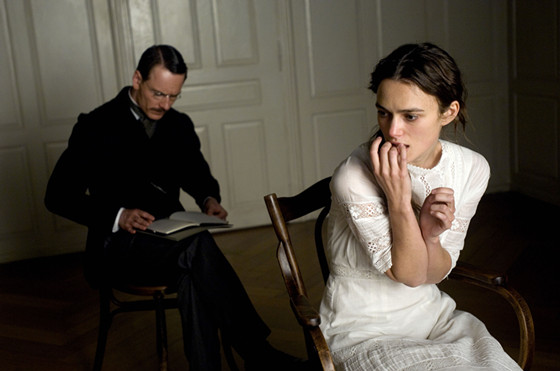
Another genre switch up for Cronenberg, A Dangerous Method saw him take on the relationship between Sigmund Freud (Viggo Mortensen) and Carl Jung (Michael Fassbender) and the controversial development of psychoanalysis in the early 20th century. Kiera Knightley is also on top form as Sabina Spielrein, a troubled young patient who undergoes therapy with Jung, who then becomes emotionally involved with her.
A Dangerous Method is a handsome looking period piece, with Cronenberg once more pulling solid performances from his cast, but what it nails in style it somewhat lacks in substance. It’s proof that Cronenberg can once again delve outside his norm but also shows perhaps that he’s still at his finest when dealing in dystopian sci-fi and body horror.
Still, there’s much to enjoy in A Dangerous Method, and Cronenberg’s efforts with the material are still much more effective than many others who could have taken on the job.
15. Shivers (1975)
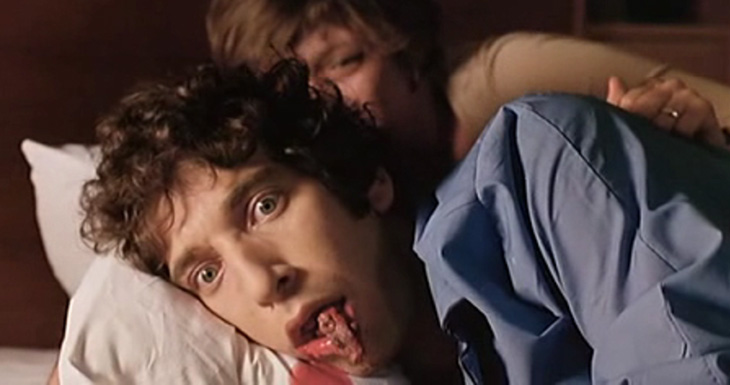
Cronenberg’s first commercial film, Shivers still is effectively scrappy and scratchy, often feeling much like a straight to DVD b-movie. Set in a modern, isolated luxury apartment complex on an island, a scientist develops a genetically engineered parasite that turns its human hosts into sexually aggressive, violent, and uncontrollably lustful individuals. You’ve guessed it, the parasite then spreads through the buildings resident, and chaos erupts.
This is Cronenberg at his most stripped down effective, playing with a considerably lower budget than what he is now used to, and Shivers is a thoroughly effective piece of work. Exploring body horror and sexual repression, it’s a horror blast from start to finish, and hugely entertaining; as well as being suitably nasty when it needs to. It remains one of Cronenberg’s most important features, and he returned to similar subject matter a couple of years later.
14. Maps to the Stars (2014)

Another one that really split opinion, and one that many others would have way down this list, Maps to the Stars is an insane Hollywood satire that takes in Scientology, nepotism and the bad behaviour of the rich and famous.
Mia Wasikowska is terrific as Agatha, a young aspiring actress returning to Los Angeles haunted by a family trauma, and her story intersects with those of Havana (Julianne Moore), Dr. Stafford Weiss (John Cusack), Benjie (Evan Bird) and Jerome Fontana (Robert Pattinson). It’s a darkly satirical drama that explores the obsession with fame, success and celebrity culture, and is frequently brilliant and occasionally frustrating.
Once again it was Cronenberg delving into different formulas and obtaining mainly positive results, although not everyone thought as much.
13. Rabid (1977)
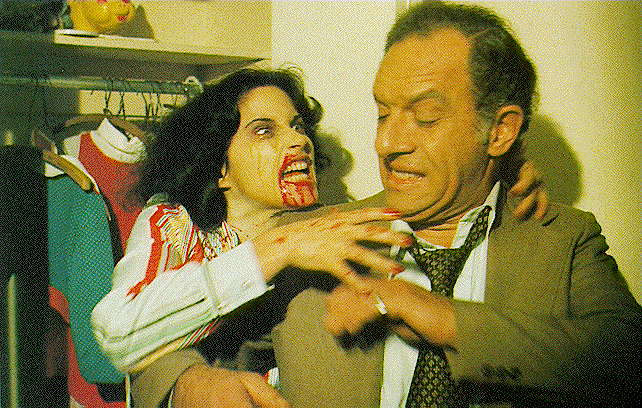
Cronenberg built on the premise and promise shown with Shivers with Rabid, the tale of a woman (Marilyn Chambers) who grows a blood sucking stinger that begins to turn people into zombie like creatures driven by violence. Rabid is short but hardly sweet, racing along at top speed as she causes a violent rabid epidemic in Montreal.
Rabid’s practical effects are a step up from Shivers, combining body horror and science fiction with pure terror resulting in something that is hugely enjoyable and nostalgically gory in the best possible way.
Rabid reflects societal fear of disease and contagion, and in a post-COVID world, it holds up superbly well, and remains one of Cronenberg’s best early works.

 Čeština
 French
 Spanish
 Portuguese
 Deutsch
 Turkish
 Dutch
Dutch
 Italiano
 Russian
 Romaian
 Portuguese (Brazil)
 Greek
Greek
 Slovenčina