


10 Reasons Why “Sentimental Value” Is One of The Best Movies of 2025

In the last decade or so, Scandinavian filmmakers have reemerged as a serious presence in the world of international film. Joachim Trier, a Norwegian director, is one of the most prominent representatives of this new generation of Scandinavian talent. His last movie, The Worst Person in the World, really put him on the map. It was even nominated for best international picture and best original screenplay at the 94th Academy Awards.
His newest film, Sentimental Value, had a lot to live up to. Luckily, it delivers. It’s a touching, insightful dramedy with a lot of layers to it. It’s received even more accolades than The Worst Person in the World. For the upcoming 98th Academy Awards, it received both nominations its predecessor did as well as seven additional nominations, including for best director and best picture.
So, why has the movie received so much praise? Well, here are ten reasons why.
1. A Distinct Sense of Place

An important aspect of making a movie is establishing your setting. Many filmmakers do an adequate job of this, but few go out of their way to make it genuinely memorable. Joachim Trier is one of those few who puts that level of effort in creating a sense of place, in this case with the family home of Nora Borg, the protagonist.
Right from the jump, we get exposition explaining the role the house has played through the generations for the Borg family. From its construction to the present, we see how the house has been around for huge events in the family’s history. Having Nora write as a child about what she thought the house felt about everything it experienced helps give life to the house, almost making it a character in its own right.
We also see the unique traits of the house that allow it to stand out even further. We see the huge crack running through much of it, for example, making it seem like the house is buckling under the weight of everything it has seen. We also see Nora go to a stove which allows her to hear things in another room. She fondly reminisces about how she heard a lot of grown up conversations she wasn’t meant to hear, expanding both the house’s character and her own.
All of these things come together to give the house a real personality, making a setting that you can always recall when thinking about the movie. How many other fictional homes could you really say that about?
2. The Use of Faces

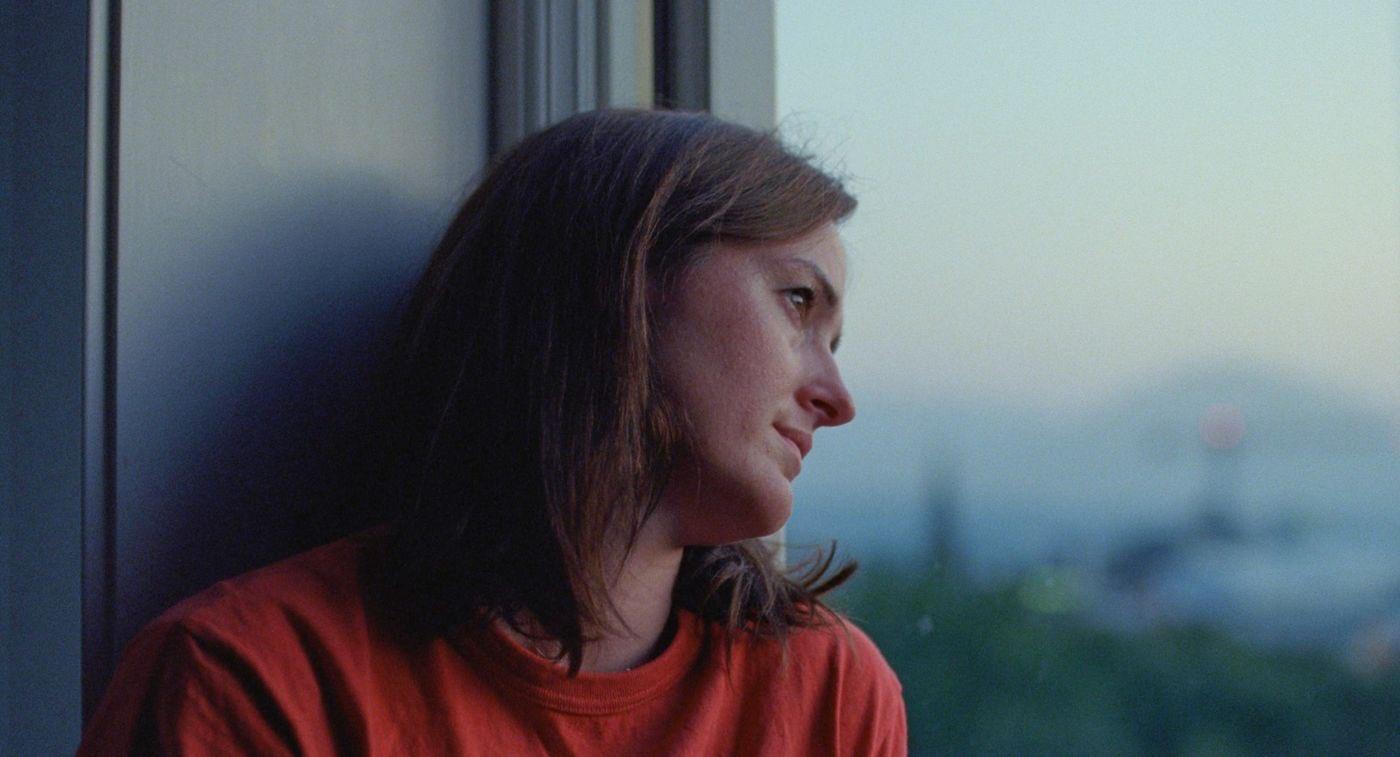
Trier isn’t just interested in settings, but also the people who populate them. He especially likes using his camera to explore their faces. In this he echoes the legendary director Ingemar Bergman, a fellow Scandinavian, who once said “for me, the human face is the most important subject of the cinema.”
Trier uses a variety of close ups to give us front row seats to the characters and what they are feeling. It’s a risky move, since prolonged shots of people’s faces don’t make for high octane entertainment. They do, however, allow us to connect with the characters more directly on a human level. Through this frequent use of these actors’ faces, we get to know these characters and their feelings far better than we do those of most other movies, even really good ones.
Of course, this exposure to character faces wouldn’t give us much if the actors themselves weren’t doing everything they could to convey the inner life of their characters so skillfully. Which takes us to our next point…
3. The Performances

There are four central performances in Sentimental Value: Renata Reinsve as the aforementioned Nora Borg; Inga Ibsdotter Lilleaas as Agnes, Nora’s better-adjusted younger sister; Stellan Skarsgård, their estranged filmmaker father; and Elle Fanning as Rachel Kemp, a good-natured US actress who wants to work with Gustav. Simply put, all of them nail their roles.
Reinsve plays Nora as a theater actress with anger toward her father, as well as deeper mental health issues that she seems reluctant to explore. Lilleaas as her younger sister Agnes is more grounded and has her own family. She’s much more forgiving of their father than Nora is, or at least less confrontational with him. The two play off of each other really well, genuinely feeling like sisters who have different feelings toward their childhoods but deeply love each other regardless.
Skarsgård brings his incredible talent and experience as an actor to his role as Gustav, their father. Gustav is charismatic and artistically gifted, but was not a great father to the girls growing up. Yet there is a deeper pain within him that hints his shortcomings may have been beyond his control. Skarsgård plays this role perfectly, managing to show how Gustav shirked his responsibility toward his girls while still conveying a hint of the inner demons that had a grip on the character and his emotional well-being.
Finally, Elle Fanning does a great job as the actress Rachel Kemp. It would have been easy for Trier and Fanning to portray her as a ditzy US actress who only cares about making a name for herself, or even being well-meaning but ultimately shallow-minded. Instead, she is a thoughtful person who genuinely cares about both her craft and other people. There is a great scene where she wants to take a ‘celebrity’ selfie with Agnes, who had starred in one of Gustav’s movies as a child. She plays the scene with such earnestness you can’t help but love her.
As a whole, these are some of the best performances of 2025. There’s a reason all four of them received Academy Award nominations for their acting.
4. Great Sense for When to Cut

Editing is a vital process for film. Editors take all the raw materials generated by everyone else in the process and synthesizes them into a coherent story. In choosing what to cut and what to keep, the editor is largely responsible for the length of each scene and overall pace of a movie. Trier’s longtime collaborator Olivier Bugge Coutté has worked as his editor for all six of his feature films. The two are a great team.
Simply put, the duo has really figured out exactly how much time to spend in each scene. That might seem simple at first glance, but it’s a deceptively difficult art to master. Some scenes that may seem important to the plot may not actually be that crucial in delving deeper into theme, character, or the emotional core of the story. On the other side of things, moments that seem unimportant to the plot might touch on one of these elements in a profound way, and could use extra time spent on them in order to maximize their impact on everything going on.
Trier and Coutté find the perfect balance in Sentimental Value. Moments where a lesser duo might have lingered for longer than necessary go by at a brisk pace here, whereas every important moment surrounding deeper components like character or theme are allowed to play out longer to really give them time to breath.
To look at an example of each, about partway through the movie, Nora has a stage performance where she is expecting both her sister and father to show up. Ultimately her sister shows up, but her father doesn’t. We barely spend any time in this scene, because the performance itself doesn’t matter. What matters is that her father didn’t show up.
Meanwhile, a conversation at the end (arguably the emotional climax of the movie) between Nora and her sister is allowed to play out slowly and deliberately, because it’s such an important scene. Because of this steady pace, the emotional payoff at the end completely works, and the quote “I had you” hits harder than if it the scene had been streamlined because it wasn’t big or exciting. A lesser team wouldn’t have had the patience or confidence to let this scene play out. Luckily, we had Trier and Coutté.
5. Exploring Generational Trauma

It’s all well and good to have the technical aspects of the movie work well. But if it isn’t about anything interesting or insightful, it runs the risk of being a well-crafted movie about nothing, and won’t stay with you for very long no matter how well its more formal aspects are executed. Sentimental Value doesn’t have that problem.
One doesn’t have to get too far into the story to see that Nora and Agnes are deeply affected by their father leaving their mother and neglecting their family when they were children. Especially Nora, who clearly suffers from some form of mental illness. She is prone to extreme distress, detachment, and a tendency to push people away. Agnes, meanwhile, is better adjusted, but it’s clear that she is simply letting a lot of her pain simmer beneath the surface. She avoids confrontation with their father, letting Nora be the one to clash with him.
As the movie goes on, however, it’s clear that even Gustav suffers from his own family history. While the story doesn’t seek to fully absolve him of what a lackluster father he was to his daughters, we slowly start to see that he’s carrying his own pain. Especially related to his mother, Karin, who committed suicide when he was just seven. It scarred him deeply. His battle to understand and cope with that becomes a prominent part of the story.
Of course, there is the story of his mom, another example of trauma within the family. Which takes us to how Trier…
6. Shows How Big Historical Events Have Personal Impacts

As mentioned above, Gustav’s mother Karin committed suicide. Unlike the pain the other members of the Borg family carry, hers was not just about internal mental health issues or strained relations with other family members. Hers has a bigger origin.
As most of us know, during World War 2 the Nazis invaded and occupied much of continental Europe. That included Norway. Karin decided to do something about it. She joined the resistance movement against the Nazis. Unfortunately, she was arrested and tortured for it. This actually echoes what happened in real life with Trier’s grandfather, the filmmaker Erik Løchen, who joined the resistance and was interned in Nazi work camps during the war.
The movie tells us that Karin’s time in Nazi captivity changed her, as also happened with Trier’s grandfather. We learn about what Karin went through in both flashbacks and in Agnes’s research as a historian into what her grandmother endured. It isn’t explicitly said that it’s the reason she committed suicide, but it is heavily implied. Through this, we see that the horrors of the Nazis extended even past their defeat in 1945.
Sometimes when we think about historical events, we only think about them in big picture terms. Especially World War 2, one of the biggest and most impactful historical events in all of human history. But these big events have a million ripple effects. The Nazis didn’t just try to wipe out an entire people or take over all of Europe, they also affected every life they came into contact with for the worse. Sentimental Value manages to portray that personal impact of historical events not just on Karin, but those affected by her death, whether directly (with Gustav) or indirectly (the rest of the Borg family, who live in the aftermath of what her death did to Gustav).
7. Not Leaving You with Easy Answers

We’ve discussed all the ways Sentimental Value doesn’t just do an excellent job of showing you how every character feels and acts, but why they feel and act those ways. You completely get why everyone has the problems they do. We get why Nora pushes people away and occasionally has serious mental health issues, we get why Agnes is deathly afraid of confrontation, we get why Gustav was such an inadequate father.
Yet Trier manages to walk a delicate line where he unveils and explores all of these things, yet doesn’t use them as an excuse for their behavior, either. Especially for Gustav. While we see him try to grapple with the death of his mom through his filmmaking, and in the process see how much pain it caused him, we also see how casually he brushes off the damage he did to his daughters. Like many older men who have damaged their families, he refuses to take full responsibility. Yet, at the same time, he does try to make amends.
Should Nora and Agnes forgive him? The movie doesn’t give a definitive answer. There is no great speech about the healing power of forgiveness, but neither is Gustav damned for what he did. When the family decides to come together at the end to work on Gustav’s new film, it’s not portrayed as some sort of magical cure to their problems. Healing is presented as a possibility, not an inevitability, and one can imagine that Gustav himself has some serious work to do for his daughters before things are good again.
At the end of the day, Sentimental Value is not trying to take a side in the family drama. It’s simply there to watch it unfold and try to understand it.
8. Finds Humor in the Hardest Places

Nothing about this story easily lends itself to humor. Even more so to the type of humor that fits with everything happening on screen. It’s tricky business to add jokes to a serious drama without undercutting the dramatic stakes and tension. Fortunately, Trier is able to pull it off.
He does this by finding jokes that complement the characters and what’s happening on screen. When Agnes’s son, his grandson, is having his birthday party, Gustav gives him a gift. The grandson opens it only to see it is a stack of European art house movies for adults, including The Piano Teacher and Irreversible.
The joke is initially funny because of how awful the movies are as a gift for a kid. But the joke also works because it reflects how awful Gustav is at connecting with others over anything other than cinema. In other scenes we have seen Gustav bond with his grandson through things like making movies on his phone. Here we see that he genuinely has no idea how else to relate to him, or anyone else for that matter.
It is through jokes that work in harmony with what the movie is going for that makes them land so effectively. While Sentimental Value is much more drama than comedy, the fact it still finds moments of well-fitting humor in an otherwise melancholic story gives it extra life. Like with his previous film The Worst Person in the World, Trier shows he can thread drama and comedy effortlessly and effectively.
9. Genuinely Cares About the Art of Cinema

As we’ve established, Gustav can only connect to others through the art of cinema. It’s something of a crutch for him. While that’s shown as a shortcoming of his, however, Sentimental Value never criticizes the art itself. In fact, it celebrates it.
A lot of this is expressed through Gustav and his attempts to connect with his family. For whatever his flaws as a father, he is (mostly) good at using it to connect with his grandson through things like the previously mentioned making of short videos on a smartphone. It also allows him to connect with Fanning’s Rachel Kemp, who herself very clearly has the desire to do something earnest and thoughtful for the medium in her position as a huge US movie star.
On a deeper level, while cinema was his escape from his trauma, which ultimately led to his daughters having conflicted feelings about his artistic pursuit, it still helps them begin to reconnect when all other means of communication fails. Even Nora seems to come to understand this toward the end when she agrees to work with her father.
It’s worth reiterating here that this doesn’t mean Gustav’s behavior is being excused. There’s a reason this movie doesn’t have a sappy forgiveness scene or a triumphant epilogue where everything is suddenly better. Rather, it’s about using art to communicate, work together, and begin to restore what was lost. Like with fellow Oscar nominee Hamnet and its wonderful ending, Sentimental Value shows that art can help heal broken families.
10. In the Director’s Own Words

“I tried to be clear. I dared to be clear. (…) I knew I had great actors; I’m very privileged. The challenge of the film for me was how do we let that clarity and honesty come through when the film talks about the opposite: our avoidance, our family’s inability to speak, the roles we give each other unconsciously. So much of the movie is about things that are unclear. So how does one tell that story in a straightforward way?”
“In this film I didn’t want to ask whether reconciliation is possible, but to show what trying to reconcile teaches us. I don’t believe we can solve everything simply by talking.”
“Out of all my films, this one has seen the most people come up to me after screenings telling me about their families, sharing personal things with me, talking about their feelings. I feel seen. Things I couldn’t say in social settings about inherited grief and the dynamics of non-communication in a family, things that are very hard to talk about, I’ve been able to express in a different language, which is making movies. So, to hear people in their own words talking to me about their own personal stuff relating to that is incredible.”
“My grandfather was in the resistance during the war; he was captured and spent time imprisoned by the Nazis across two different camps, and he was very traumatized by that. He made films after the war, and I think that was a way to survive and find a place in the world again. He was creating something and seeking meaning in it. I think that’s at the core of the process of making this film for me.”
— Joachim Trier talking to Hollywood Reporter, Euro News, Screen Daily, and RogerEbert.com
Author Bio: David Hollingsworth is a historian of U.S. and Latin American history who teaches history at Palomar College and writing at UC San Diego. In his spare time he enjoys, among other things, watching and writing about movies. You can find him on Instagram at dave_of_reckoning.
- News
- Art
- Cars and Vehicles
- Crafts
- Beauty
- Dance
- Dating
- Drinks
- Film
- Fitness
- Fishing and Hunting
- Food and Recipes
- Giochi
- Gardening
- Health
- Home
- Literature
- Lifestyle
- Local Business
- Music
- Marketing
- Networking
- Nature
- Altre informazioni
- Party
- Religion
- Shopping
- Sports
- Theater
- Tech
- Travel and Events
- Wellness
- Wordpress

 English
 Čeština
 French
 Spanish
 Portuguese
 Deutsch
 Turkish
 Dutch
Dutch
 Russian
 Romaian
 Portuguese (Brazil)
 Greek
Greek
 Slovenčina