The GRANITE Act empowers residents and businesses of Wyoming to sue foreign governments and their agencies directly in state courts if they attempt to censor speech protected by US law. The law explicitly prohibits officials in Wyoming from assisting in the enforcement of foreign laws regarding "online safety, hate speech, misinformation," and other similar categories to prevent foreign overreach.
The bill imposes significant financial penalties, including a minimum fine of $10 million per violation, which can be tripled, as well as the seizure of assets of foreign states in the US to satisfy judgments.
A core mechanism of the law is to waive the traditional legal defense of sovereign immunity that foreign states often use to shield themselves from lawsuits in US courts. The bill is a direct legislative response to the increasing demands for censorship from foreign regulatory authorities in the UK, EU, Brazil, and Australia, and was inspired by current legal disputes such as the one between 4chan and the UK's Ofcom.
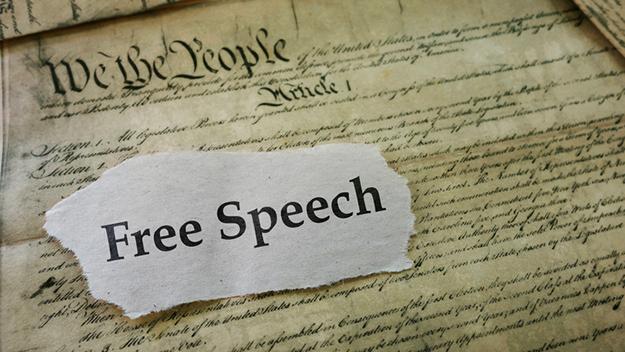
In a bold move to protect the digital sovereignty of the US, the state of Wyoming has launched a legislative offensive against foreign governments attempting to control online speech within the United States.
The groundbreaking "Guaranteeing Rights Against Novel International Tyranny and Extortion (GRANITE) Act" was introduced by Representative Daniel Singh (R-Cheyenne) and marks the first formal step in a fight that its supporters deem crucial for free speech. The bill, designed by attorney Preston Byrne – who represents platforms like 4chan in censorship disputes – aims to allow American citizens and businesses to sue foreign states and their regulatory agencies when they attempt to censor speech protected under US law.
This development comes amid growing concerns over censorship demands from the UK, Brazil, the European Union, and Australia, which increasingly try to impose their speech standards on US companies. The GRANITE Act is a direct response to what its authors see as overreach by foreign regulatory authorities.
#usa #freespeech #wyoming
The GRANITE Act empowers residents and businesses of Wyoming to sue foreign governments and their agencies directly in state courts if they attempt to censor speech protected by US law. The law explicitly prohibits officials in Wyoming from assisting in the enforcement of foreign laws regarding "online safety, hate speech, misinformation," and other similar categories to prevent foreign overreach.
The bill imposes significant financial penalties, including a minimum fine of $10 million per violation, which can be tripled, as well as the seizure of assets of foreign states in the US to satisfy judgments.
A core mechanism of the law is to waive the traditional legal defense of sovereign immunity that foreign states often use to shield themselves from lawsuits in US courts. The bill is a direct legislative response to the increasing demands for censorship from foreign regulatory authorities in the UK, EU, Brazil, and Australia, and was inspired by current legal disputes such as the one between 4chan and the UK's Ofcom.
In a bold move to protect the digital sovereignty of the US, the state of Wyoming has launched a legislative offensive against foreign governments attempting to control online speech within the United States.
The groundbreaking "Guaranteeing Rights Against Novel International Tyranny and Extortion (GRANITE) Act" was introduced by Representative Daniel Singh (R-Cheyenne) and marks the first formal step in a fight that its supporters deem crucial for free speech. The bill, designed by attorney Preston Byrne – who represents platforms like 4chan in censorship disputes – aims to allow American citizens and businesses to sue foreign states and their regulatory agencies when they attempt to censor speech protected under US law.
This development comes amid growing concerns over censorship demands from the UK, Brazil, the European Union, and Australia, which increasingly try to impose their speech standards on US companies. The GRANITE Act is a direct response to what its authors see as overreach by foreign regulatory authorities.
#usa #freespeech #wyoming









 Čeština
 French
 Spanish
 Portuguese
 Deutsch
 Turkish
 Dutch
Dutch
 Italiano
 Russian
 Romaian
 Portuguese (Brazil)
 Greek
Greek
 Slovenčina