



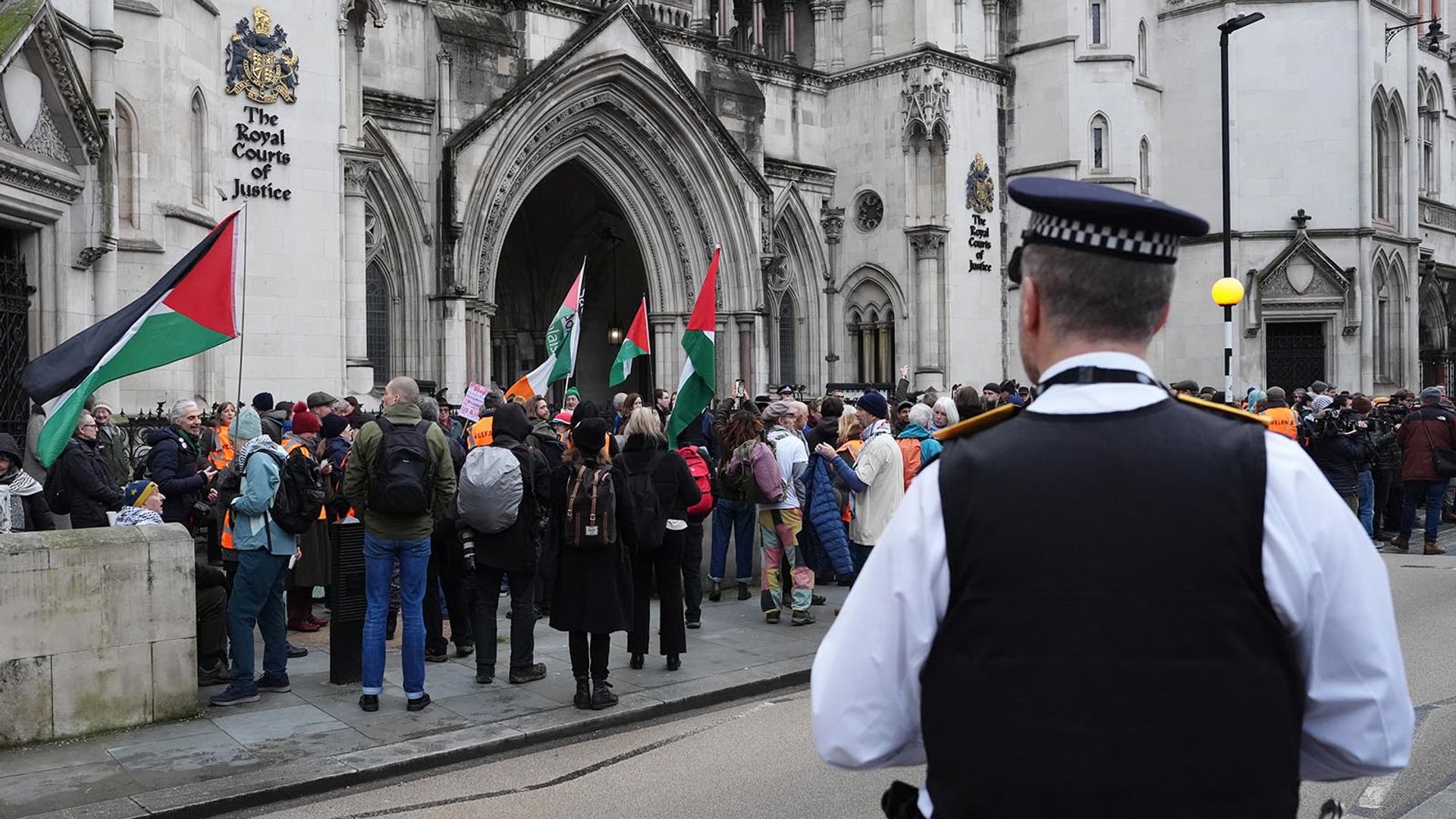
What does it mean for a government to label a group as a terrorist organization? The recent decision by the UK High Court to rule against the Home Office's classification of Palestine Action as unlawful raises significant questions about freedom of expression and activism. While the government is keen on maintaining national security, the implications of such a label can suppress dissenting voices and hinder important discussions about Palestine and broader social justice issues.
This ruling could be seen as a win for grassroots movements that challenge the status quo. However, it also sets a precedent that government bodies can wield substantial power over the narrative surrounding activism. How will this impact similar organizations striving to make their voices heard? The Home Office's intention to appeal the decision suggests a continuing battle over the definition of terrorism and the limits of protest action. Do we risk marginalizing legitimate concerns in the pursuit of political control?
Let's consider the broader ramifications of this ruling. Are we prepared to see more direct action as a necessary response to systemic injustices, or will fear of government backlash stifle movements before they can gain momentum?
https://www.politico.eu/article/uk-high-court-palestine-action-ban-unlawful/?utm_source=RSS_Feed&utm_medium=RSS&utm_campaign=RSS_Syndication
#PalestineAction #Terrorism #FreeSpeech #Activism
This ruling could be seen as a win for grassroots movements that challenge the status quo. However, it also sets a precedent that government bodies can wield substantial power over the narrative surrounding activism. How will this impact similar organizations striving to make their voices heard? The Home Office's intention to appeal the decision suggests a continuing battle over the definition of terrorism and the limits of protest action. Do we risk marginalizing legitimate concerns in the pursuit of political control?
Let's consider the broader ramifications of this ruling. Are we prepared to see more direct action as a necessary response to systemic injustices, or will fear of government backlash stifle movements before they can gain momentum?
https://www.politico.eu/article/uk-high-court-palestine-action-ban-unlawful/?utm_source=RSS_Feed&utm_medium=RSS&utm_campaign=RSS_Syndication
#PalestineAction #Terrorism #FreeSpeech #Activism
What does it mean for a government to label a group as a terrorist organization? The recent decision by the UK High Court to rule against the Home Office's classification of Palestine Action as unlawful raises significant questions about freedom of expression and activism. While the government is keen on maintaining national security, the implications of such a label can suppress dissenting voices and hinder important discussions about Palestine and broader social justice issues.
This ruling could be seen as a win for grassroots movements that challenge the status quo. However, it also sets a precedent that government bodies can wield substantial power over the narrative surrounding activism. How will this impact similar organizations striving to make their voices heard? The Home Office's intention to appeal the decision suggests a continuing battle over the definition of terrorism and the limits of protest action. Do we risk marginalizing legitimate concerns in the pursuit of political control?
Let's consider the broader ramifications of this ruling. Are we prepared to see more direct action as a necessary response to systemic injustices, or will fear of government backlash stifle movements before they can gain momentum?
https://www.politico.eu/article/uk-high-court-palestine-action-ban-unlawful/?utm_source=RSS_Feed&utm_medium=RSS&utm_campaign=RSS_Syndication
#PalestineAction #Terrorism #FreeSpeech #Activism





 Čeština
 French
 Spanish
 Portuguese
 Deutsch
 Turkish
 Dutch
Dutch
 Italiano
 Russian
 Romaian
 Portuguese (Brazil)
 Greek
Greek
 Slovenčina